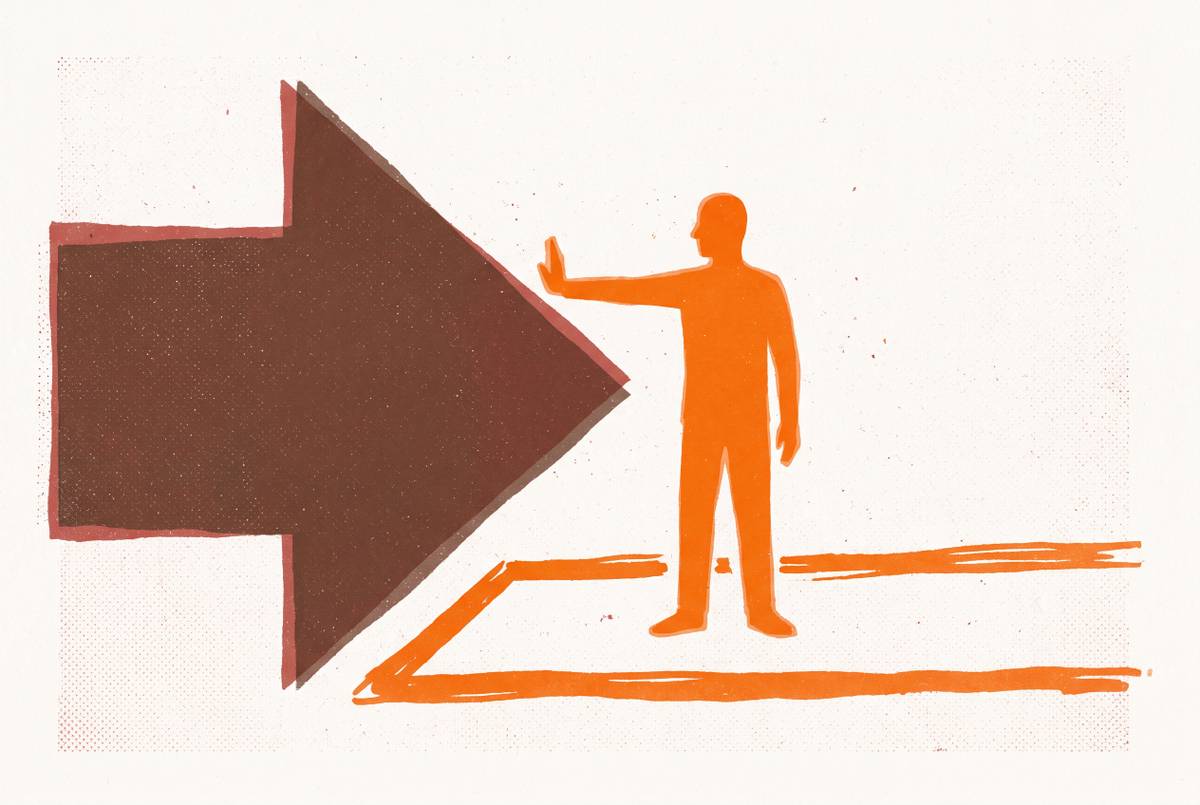
The Role of Autonomy Loss in Workplace Burnout
Control over your work prevents burnout better than any motivational speech ever will.
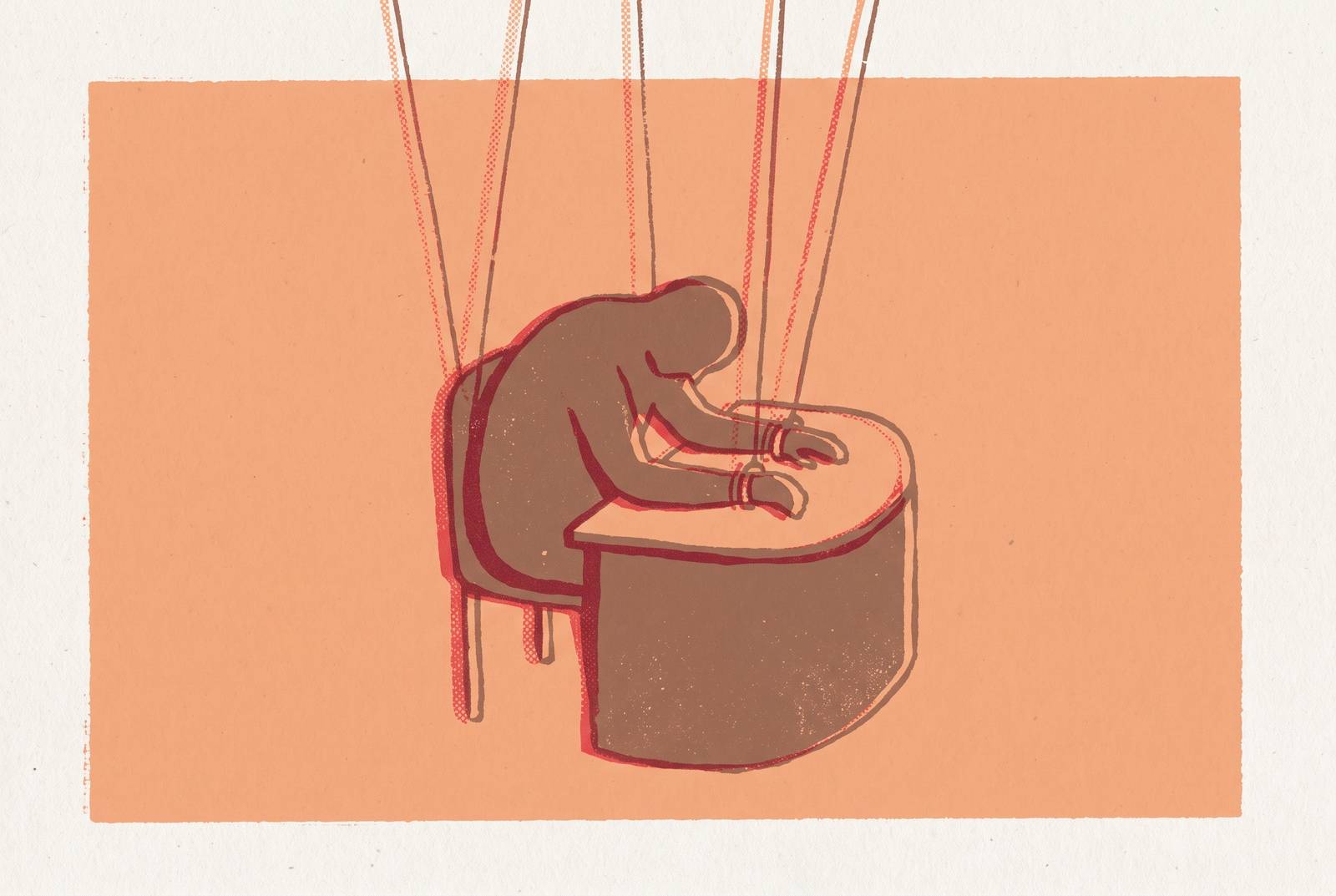
Losing control over how, when, and where the job gets done is one of the most consistent structural drivers of burnout on record. It's one of the most consistent structural drivers of burnout on record, and the psychological mechanism behind it is well enough understood at this point that treating burnout as a personal failing looks less like caution and more like a category error.
Autonomy loss as a structural burnout driver, not a personal failing
The default explanation for burnout still leans hard on the individual: not enough resilience, poor stress management, insufficient grit to push through a rough quarter. That framing survives mostly because it's convenient, not because the numbers support it. Nearly half the global workforce, 48%, reports burnout symptoms, and a separate measure puts the share of employees who've experienced burnout at their current job at 77%, with 42% describing it as chronic, feeling it most or all of the time https://meditopia.com/en/forwork/articles/employee-burnout-statistics https://www.shahzebspeaks.com/psychology-of-workplace-burnout/.
Sit with those figures for a second. A problem affecting three-quarters of a workforce isn't a personality defect scattered randomly across individuals, it's a pattern, and patterns at that scale point to something structural rather than personal. One researcher's framing on this is direct: burnout is not simply an individual resilience issue, it is often a structural and leadership challenge. Something in the operating environment is producing this outcome with enough consistency that blaming the people inside it stops making statistical sense. Burnout-driven turnover has climbed 48% since 2024, which suggests organizations are bleeding talent over exactly the conditions they keep asking employees to personally absorb https://www.shahzebspeaks.com/psychology-of-workplace-burnout/.
Autonomy at work and its removal in practice
Autonomy gets misread constantly as an absence of rules, a kind of workplace anarchism where everyone does whatever they want. That gets it backwards. Autonomy is the presence of meaningful participation, not the absence of structure.
Workplace autonomy breaks into three practical dimensions: control over how work gets done, control over when it gets done, and control over where it gets done. A manager who explains the reasoning behind an assignment, offers a genuine choice in how someone approaches a task, and actually listens when an employee pushes back on process is practicing autonomy-support. None of that requires abandoning deadlines or accountability.
Its removal produces a familiar cluster of behaviors instead. Micromanagement strips decision-making down to granular oversight where nothing gets decided without a manager's sign-off. Rigid schedules eliminate any flexibility over timing or location, even when the work itself doesn't require it. Approval chains multiply until minor decisions require escalation through two or three layers just to move forward https://www.hrdive.com/news/employees-autonomy-burnout-engagement/813875/. Digital presenteeism adds a newer wrinkle: the quiet expectation of constant availability and instant responsiveness, which has gotten more pronounced as remote and hybrid setups lean harder on chat platforms and shared calendars.
The damage isn't confined to daily tasks, either. Roughly 21% of workers say they feel they're losing control over their professional future altogether, meaning career development and skill-building, not just whether they can pick their own lunch hour https://speakwiseapp.com/blog/employee-autonomy-statistics https://www.thehrdigest.com/a-lack-of-career-autonomy-can-be-linked-to-burnout-in-the-workplace/. That's a longer horizon of powerlessness, and it compounds differently than a bad week of micromanagement does.
The psychological mechanism: how autonomy loss erodes the need for self-determination
Self-Determination Theory gives the clearest account of why this matters biologically, not just administratively. The theory holds that human motivation rests on three basic psychological needs: autonomy, competence, and relatedness. These are closer to psychological nutrients than workplace perks or nice-to-haves sitting alongside salary and benefits, and starving any one of them produces a measurable deficit. They're closer to psychological nutrients, and starving any one of them produces a measurable deficit.
A need going unmet differs from a need being actively frustrated. An unmet need is a gap, something missing. A frustrated need is an injury, something being actively suppressed against resistance. When autonomy gets stripped away through micromanagement or rigid oversight, employees aren't just missing out on a nice feature of their job, they're experiencing ongoing psychological friction. Research grounded in SDT consistently links controlled forms of motivation and need frustration to higher burnout and turnover, while autonomous motivation tracks with better performance, satisfaction, and engagement.
A second layer separates out here, too. Autonomy functions as a signal, not just a mechanism. When a manager extends real decision-making latitude, that's an implicit statement of trust. When that latitude gets revoked or was never offered, the message an employee receives reads as distrust, sometimes as low regard for their judgment. So the injury runs two tracks at once: the practical constraint of not being able to do the work your way, and the relational sting of being told, in effect, that your judgment isn't trusted enough to matter https://www.hrdive.com/news/employees-autonomy-burnout-engagement/813875/. Employees who do feel that trust show it in retention numbers: those who report having autonomy are 2.3 times more likely to stay with their organization https://speakwiseapp.com/blog/employee-autonomy-statistics.
How autonomy erosion compounds into exhaustion, cynicism, and disengagement
Christina Maslach's model of burnout breaks the condition into three dimensions: emotional exhaustion, depersonalization (cynicism toward the work and the people in it), and reduced personal accomplishment, the sense that nothing one does actually matters. Autonomy loss doesn't hit all three simultaneously. It tends to enter through exhaustion first, the bone-deep depletion that a good night's sleep does nothing to fix, and drags cynicism and diminished efficacy in behind it.
Why exhaustion first? Because navigating constraints takes energy that produces nothing. Getting three approvals for a decision that used to take one signature burns the same mental fuel as doing the actual work, except at the end of it there's no output, no sense of progress, just the fatigue of having jumped through hoops. Creative latitude, when it exists, replenishes people even during hard work. Its absence just drains, full stop, no offsetting benefit on the other side of the ledger.
Cynicism follows as a kind of defensive crouch. Once someone has spent enough cycles hitting a wall on decisions they used to make freely, disengaging emotionally starts to look like the rational move, a way of protecting whatever energy is left. It isn't laziness, it's closer to a nervous system deciding that caring is no longer worth the cost.
Reduced efficacy is maybe the cruelest piece, because it's partly accurate rather than purely a distortion of perception. When employees genuinely can't make decisions or extend themselves creatively, the actual conditions that generate innovation and a sense of accomplishment disappear. The feeling that nothing they do matters isn't always a cognitive glitch, sometimes it's a fairly precise read of the situation. Across roles, low-autonomy positions carry a 43% higher burnout risk compared to high-autonomy ones, which puts a number on what the mechanism already predicts https://www.employee-monitoring.net/resources/employee-burnout-statistics-2026. Chronic burnout sustained past 18 months has been linked to a meaningfully elevated risk of Major Depressive Disorder, a reminder that this isn't only a productivity story https://www.shahzebspeaks.com/psychology-of-workplace-burnout/.
Who carries the heaviest autonomy deficits
Healthcare is the ceiling case, and it's instructive precisely because surveys of the sector reveal the autonomy-burnout link directly rather than burying it in noise. The sector's overall burnout rate is 76%, and nursing staff specifically report 82%, the highest of any group measured https://www.employee-monitoring.net/resources/employee-burnout-statistics-2026. Clinical protocols, staffing ratios, and shift structures dictate how and when care gets delivered, often with little regard for individual clinician preference or expertise.
Generational data adds a second axis to the picture. Millennial workers report burnout at 74%, Gen Z at 71%, compared to 59% among Gen X and 48% among Baby Boomers https://www.employee-monitoring.net/resources/employee-burnout-statistics-2026. One plausible reading: younger workers entered the labor market with higher baseline expectations around flexibility and self-direction, so its absence lands as more of a violation than it would for a generation that never expected it. That's a reasonable inference, not a settled fact, but the gap between 74% and 48% is large enough to demand some explanation.
Geography matters too, in a quieter way. As of 2026, only three states, California, Connecticut, and New York, have proposed right-to-disconnect legislation. Everywhere else, burnout prevention sits almost entirely at employer discretion, which means the structural protections that could formalize autonomy simply don't exist at scale yet across most of the country. Whether that changes is a legislative question, not a psychological one, but it shapes how much of this problem individuals are left to solve on their own.
Reclaiming a sense of agency when the organization won't shift
Structural problems need structural fixes, and no amount of individual coping mechanisms substitutes for an organization actually redesigning how it distributes control. That said, agency reclaimed within a constrained system isn't nothing, and it has documented psychological effects that deserve to be taken seriously rather than dismissed as a consolation prize.
Cognitive need crafting is a reframing exercise, identifying where real latitude already exists inside an otherwise rigid role and mentally sorting the controllable from the uncontrollable so attention goes toward the former instead of leaking out toward things that can't be changed anyway. It sounds almost too simple to matter, but the mechanism is the same one behind a lot of clinical stress-management work: attention is a finite resource, and where it goes determines what gets reinforced.
Behavioral need crafting is the applied version. Taking initiative on decisions nobody's explicitly claimed, proposing a process tweak that hands a bit more voice back without requiring a full organizational overhaul, setting a boundary around after-hours availability where policy allows it. None of it rewrites the org chart. All of it nudges the day-to-day experience of the job back toward something resembling participation rather than pure compliance. Under the heading "What individuals can do to reclaim a sense of agency when the organization won't shift," the article introduces "work-related need crafting," a framework grounded in SDT that outlines how cognitive and behavioral forms of self-directed adjustment can foster need satisfaction and reduce need frustration, with individuals proactively shaping how they experience and engage with work to better meet their own psychological needs.
How reflective writing functions as an internal autonomy practice
Journaling, in this context, isn't a wellness platitude tacked onto the end of a burnout article for padding. It functions as a reclamation of internal agency at precisely the moment external control has been stripped away. When a job denies choices about tasks, timing, and method, the act of writing hands back choices about meaning, framing, and narrative, three things no manager can approve or deny.
Therapeutic journaling isn't about logging what happened, it's about processing the feelings, thoughts, sensations, and meaning sitting underneath the events. Psychology Today describes it as holistic precisely because it touches physical, mental, emotional, and spiritual dimensions at once, spiritual meaning the search for meaning itself, not anything religious.
The neuroscience backing this up traces to Dr. James Pennebaker's expressive writing research, which found that putting emotional experience into language starts organizing what previously just felt chaotic. That process engages the prefrontal cortex, the region responsible for meaning-making and regulation. There's a related phenomenon called affect labeling: naming an emotion in words appears to calm activity in the amygdala, the brain's threat-detection center, which is a fairly elegant mechanism when you think about it. Structured writing, in effect, hands processing back to the more deliberate part of the brain right when stress has pushed everything toward reactive, threat-scanning mode.
Building a sustainable reflective practice when energy is already depleted
Burnout erodes exactly the motivation and cognitive bandwidth a person needs to start a new practice. Recommending something that demands high upfront effort, like a rigorous daily long-form journal, to someone who's already running on fumes will fail because the entry cost is mismatched to the depleted state it's meant to address.
The design principle that actually holds up is almost annoyingly simple: the best journaling habit is the one a person can actually keep doing. Low-friction beats comprehensive, every time, for anyone running a psychological deficit rather than a surplus.
Blank-page journaling asks a lot of someone who's already stretched thin, mostly because staring at an empty page with no direction can feel like one more task with no clear purpose, which is the last thing a depleted person needs. A specific prompt cuts that cost down considerably. Something as narrow as "what felt outside my control today, and what remained within it?" It gives the session a shape before it starts, which cuts the cost of deciding what to write about and lets the person begin immediately.
Journaling and mood tracking differ from each other. Mood tracking logs a state for later review, more of a data collection exercise than anything else. Journaling, done this way, processes the state in real time: what happened, what it meant, and what, if anything, is still within reach to control. That last question is the one doing the real work, because it's the same question autonomy loss keeps trying to erase. In discussing building a sustainable reflective practice when energy is already depleted, the article notes that 51% of workers identify lack of autonomy as a contributing factor to their experience of burnout https://speakwiseapp.com/blog/employee-autonomy-statistics. Also in the section on building a sustainable reflective practice when energy is already depleted, the article reports that 51% of workers reported burnout, representing the highest observed level since tracking began https://www.thehrdigest.com/a-lack-of-career-autonomy-can-be-linked-to-burnout-in-the-workplace/.
Sources
- Employee Burnout Statistics 2026: Global & Workplace Insights - Meditopia for Work
- Greater autonomy may lead to lower levels of burnout
- Psychology of Workplace Burnout | How to Recover [2026]
- A Lack of Career Autonomy Can Be Linked to Burnout in the Workplace
- Employee Autonomy Statistics 2026
- employee-monitoring.net