Talking to Yourself Is Finally Talking Back
Voice journaling works when the app remembers what you said.
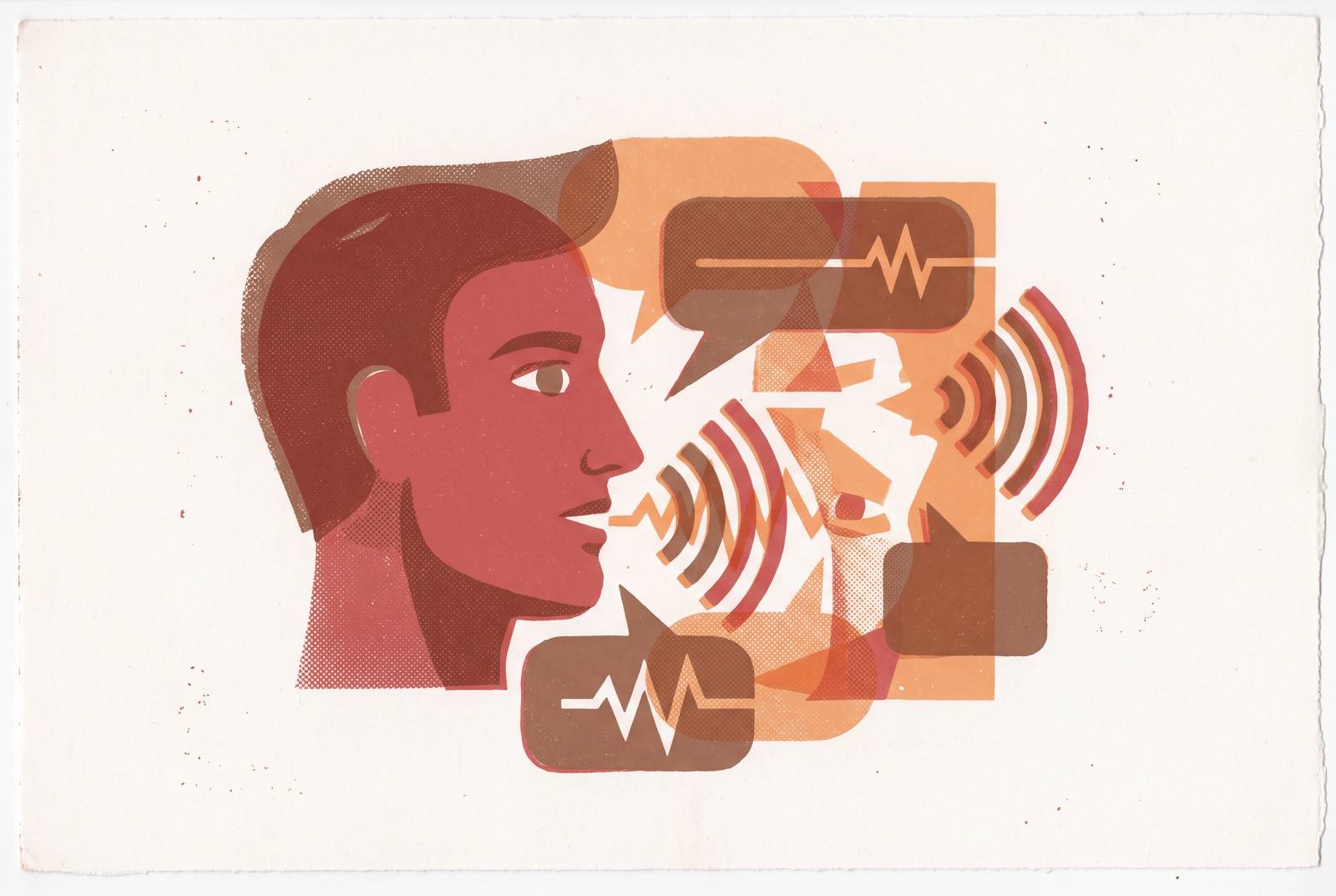
A voice journaling app with entry pattern recognition and weekly reflections needs to do more than record audio. It needs prompts that help organize thought, a retrievable record, and a way to revisit recurring themes. The cognitive case is straightforward. Self-talk already helps the brain work through experience, and structured voice capture can keep that conversation in a form that makes journaling useful.
Why the brain has always needed to talk to itself
The brain does not wait for a journal to begin reviewing experience. The default mode network, or DMN, activates during self-referential thinking, drawing on the medial prefrontal cortex, posterior cingulate cortex, and temporal-parietal junction. Its territory includes what happened, what should have been said, and what might come next. This is ordinary cognitive work. The urge to think something through out loud comes from the same need to work through what happened as well as take it in.
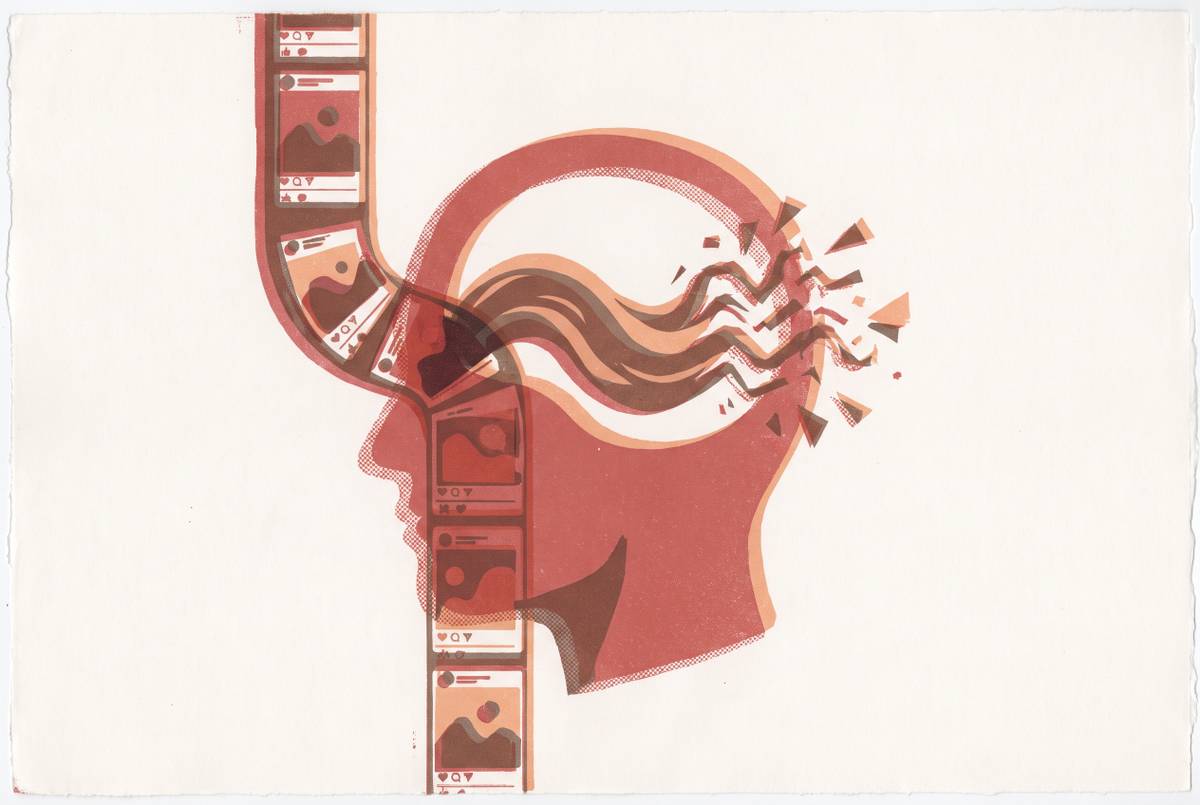
But processing can turn into repetition without resolution. When this activity runs unchecked, it can become rumination, with unresolved thoughts recycling through working memory before attention can settle elsewhere. Killingsworth and Gilbert found that mind-wandering predicted unhappiness regardless of what a person was doing. Focus, even on something unpleasant, compared favorably with an undirected mind. The distinction is not between having thoughts and having none, but between attention that goes somewhere and attention that keeps returning to the same place.
The Zeigarnik effect helps explain why unfinished business is so persistent. Incomplete tasks remain active cognitive representations until they are resolved, so an unprocessed worry can occupy working memory. Self-talk is one way the brain tries to close these open loops by narrating what happened and working toward an account of it.
On this account, the crucial difference is whether the thought acquires structure. Repeating an unresolved concern keeps it available, while constructing a narrative gives its parts a relationship to one another. Sequence begins to replace recurrence. Externalizing the dialogue offers a way to support that shift, because the mind no longer has to be both the place where a thought is worked on and the only place where it is kept.
What happens when inner dialogue is written down
Writing puts thought outside the mind and does more than store it. The act uses a circuit that runs through the prefrontal cortex, hippocampus, and language centers, helping put scattered thoughts into a form in which they fit together. That organization reduces cognitive load and frees working memory. The page is doing more than holding words. Producing those words asks the writer to turn an emotional experience into something that can be named, ordered, and considered.
Matthew Lieberman’s fMRI studies at UCLA provide one anchor for this account. They found that affect labeling, or putting an emotion into words, reduced amygdala activation and increased activity in the right ventrolateral prefrontal cortex. Naming an emotion changes how it is processed. Language can shift processing away from reactive limbic activation toward regulated prefrontal engagement.
Pennebaker’s expressive writing protocol provides the other anchor. People who completed it showed improvements in immune function, blood pressure, doctor visits, mood, and performance on cognitive tasks. The important distinction was between expression and narrative construction, since people who simply vented on paper showed no measurable benefit. Release alone did not explain the result. The useful work came from organizing chaotic emotional experience into a coherent story, which is a more demanding act than emptying a mental wastebasket.
Cognitive offloading supports that work by moving a worry or task into an external store. Ramirez and Beilock’s study at the University of Chicago found that a short session of expressive writing before an exam produced measurably better performance. This connects emotional processing to a practical constraint. When worry takes up working memory, less is left for the task at hand, and writing gives that worry somewhere else to go. A journal can therefore function both as a place to construct meaning and as a place to leave something without losing it.
The evidence also extends beyond healthy adults. A 2025 systematic review in Frontiers in Neurology found that journaling, poetry, Chinese calligraphy, and memory notebooks function as effective instruments for cognitive, emotional, and social rehabilitation in mild cognitive impairment and dementia. Those interventions broaden the picture of writing as an active cognitive practice. If writing works partly through the processes it recruits, changing how words are produced may change the experience.
Why handwriting activates more of that circuit than typing
Handwriting joins language with its own set of demands on the body. It activates motor cortex, somatosensory cortex, visual processing areas, Broca’s area for language production, and the hippocampus for memory encoding, while typing recruits a narrower set of those regions. Forming the words is part of processing them. The difference is therefore not simply between two ways of putting identical text onto a surface, because the route to the text engages the brain differently.
A 2024 study found that writing by hand strengthened connectivity between brain regions involved in memory and learning. The proposed mechanism is processing meaning. A result about learning cannot, by itself, establish that a handwritten journal produces greater psychological benefit than a typed one. More neural engagement is not a universal scorecard on which the pen automatically wins.
Recent meta-analyses debate the advantage of handwriting over typing for psychological outcomes. A deeply honest digital entry may help with emotional processing as much as a deeply honest handwritten entry does. The modality shapes how readily someone enters the process, rather than replacing the underlying need to name feelings and build a narrative.
Speaking offers another way into that process. It activates language production, emotional processing, and narrative construction, using parts of the brain that writing also uses. Voice was never waiting to become cognitively capable. Its historical limitation was the lack of a durable, usable container, because an unrecorded conversation with oneself leaves no external store to which the thought can be entrusted. The speaker can work through an experience without gaining the full offloading benefit of a record that remains available.
The second limitation follows from the first. A written journal can be searched and revisited, making shifts in beliefs, moods, and recurring concerns visible across entries. Speech that goes unrecorded is gone before those entries can be compared. This is an infrastructure problem rather than evidence that speech is an inferior way to think.
What changes when a voice journaling app shows patterns and supports weekly reflections
A voice-first system that transcribes, organizes, and reflects speech back can provide three properties associated with effective written journaling. These are externalization, narrative structure, and retrievability. Externalization gives the thought somewhere to stay, narrative structure supports coherence, and retrievability allows entries to be compared over time.
Pattern recognition links entries to one another, while a weekly review gives a person time to look at recurring themes, shifts in tone, and changes in outlook together. Capture is only the beginning of that sequence. A system that preserves speech addresses a different need from one that also helps a person revisit it, and neither function should be confused with the mere presence of a conversational interface.
The “talking back” element can contribute to structure when a system returns the speaker’s words as organized text. Seeing an emotion named and placed within an account of events connects this experience to the principle of affect labeling. Lieberman’s findings establish a response to putting emotions into words. The speaker may encounter and work with a clearer expression of the emotion.
The SoulNote finding supports a related but broader principle. Sustained, structured, AI-supported expressive practice produced cumulative emotional benefit beyond that of single sessions. Its relevance lies in the combination of continuity and structure, rather than in evidence for speaking as the decisive ingredient. A conversational system can help shape an ongoing expressive practice.
Prompts also change the entry point into that practice. The common blank-page failure asks someone to supply both the experience and the structure for examining it before anything has been written. Speaking is already an informal mode of processing experience for many people, so a prompt-guided system can begin with a familiar behavior. The page no longer has to make the opening move. What takes its place still needs to help people think things through clearly, though, because even with an easier start, working through a concern differs from repeating it.
Why different goals still need different approaches, even in voice journaling
A change of medium does not erase differences in purpose. Expressive writing is linked to less stress and better immune function, gratitude journaling to more positive affect, and reflective journaling that uses structured frameworks to self-knowledge and behavioral change. Those distinctions survive the move to voice. Talking about something painful, naming something appreciated, and examining a recurring behavior are not the same exercise merely because all three enter through a microphone.
A two-to-three minute prompted voice entry counts as a successful habit, without requiring a deep account of an entire day. Aiming for depth before consistency is established is a common failure mode. A single reflective question about what remains unresolved from the day can provide enough structure to begin narrative construction. The prompt supplies a direction without demanding that the speaker arrive with a finished explanation.
That modest beginning also fits the timescale of habit formation. Research places the median considerably beyond the popular 21-day claim, which makes the design of the early routine more consequential than the intensity of initial motivation. A sustainable entry needs a manageable starting point. Voice reduces the setup and writing demands of that moment, but the best medium remains the one that enables a particular person to engage honestly and return. Handwriting, typing, and speech need not compete for a universal title.
To support that return, revisit a week’s worth of entries. Reading back spoken thoughts lets a person think about recurring themes and shifts in tone, with feedback that is lost when self-talk goes unrecorded. The accumulated record lets a person see what the practice is revealing, which can help sustain it past the early weeks.