Narrative Identity Theory and How People Construct a Self
People construct identity as an ongoing story, not by discovering a fixed inner self.
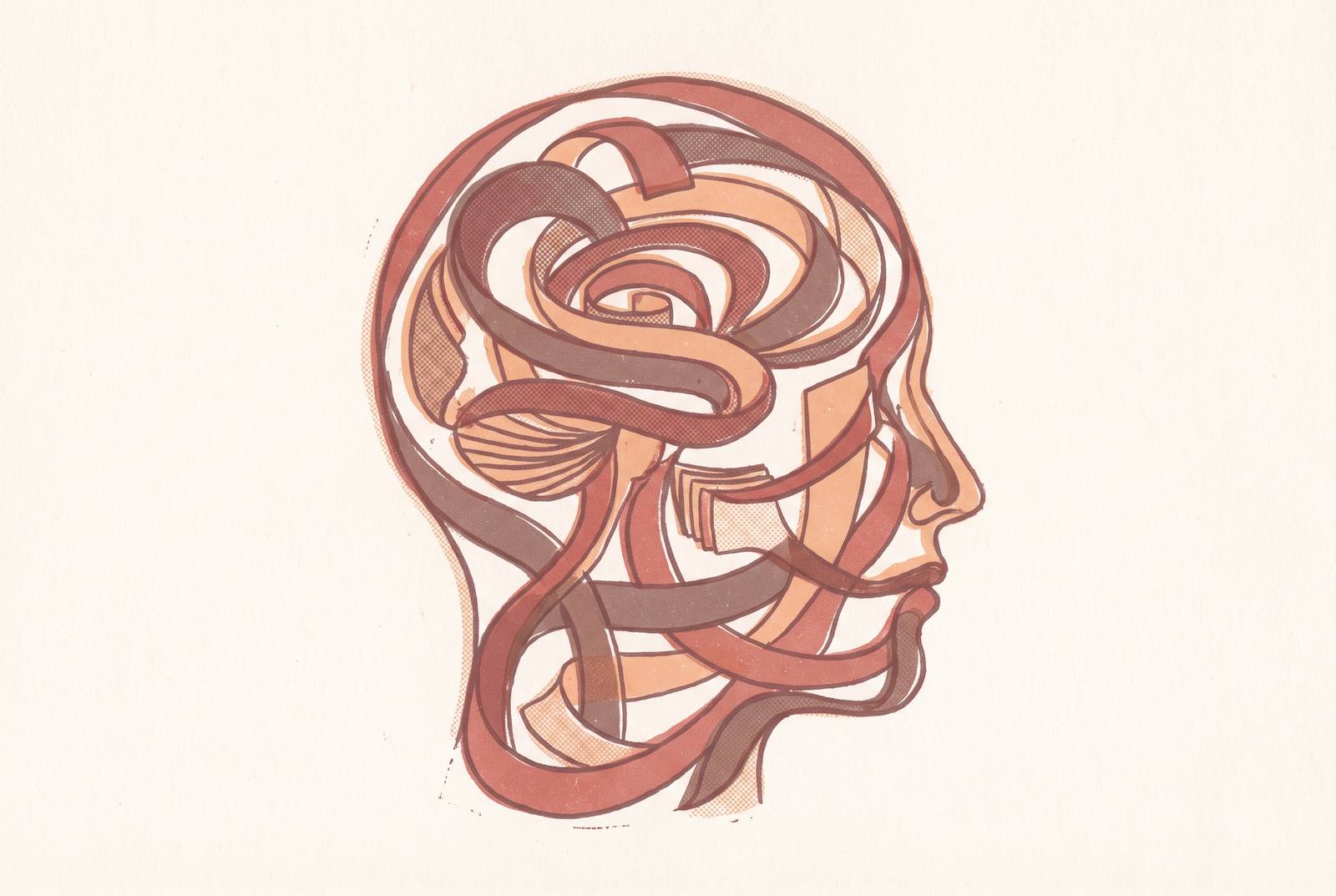
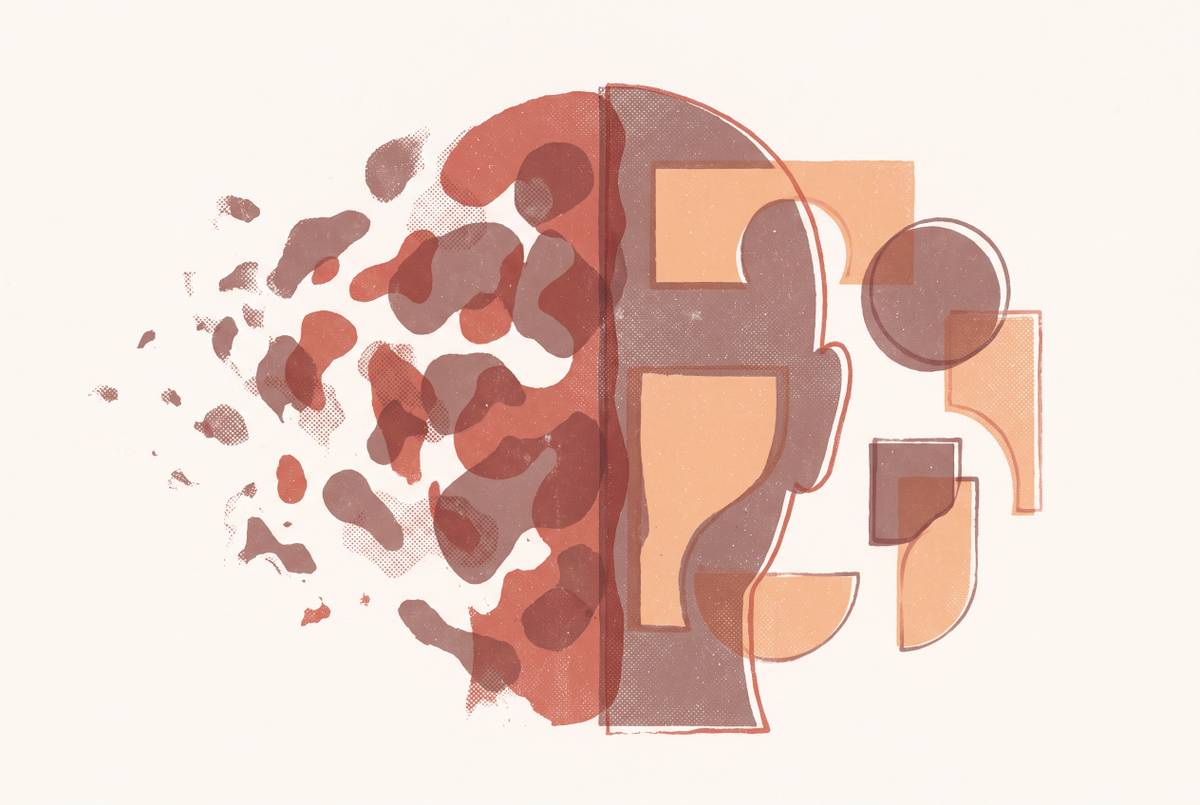
Most people assume the self is something fixed, buried somewhere inside, waiting to be found through enough introspection or enough therapy or enough time alone with a journal. Narrative identity theory says otherwise: the self is a story, continuously built rather than excavated. The canonical formulation describes narrative identity as the internalized and evolving life story that integrates past experiences, present realities, and anticipation of the future into a coherent sense of self. The word "evolving" carries real weight in that definition. It means the story has no final draft, no manuscript locked away waiting for the right reader to discover it. A phrase for this is "the center of narrative gravity," the self as a kind of organizing point around which experiences and perceptions orbit, unifying a scattered life into something that feels coherent without being static. That framing rules out two tempting shortcuts. The self is an ongoing editorial project built through narrative identity, not a stable core personality sitting beneath the noise waiting to be uncovered through self-examination, and not autobiography or memory recall dressed up in academic language. It is closer to an ongoing editorial project, one with a very demanding and very biased editor: the person living it.
How the story gets built: the cognitive work narration demands
Treating identity as a story raises an obvious question. How does anyone actually build one? A 2025 paper in Philosophical Psychology by Guerrero-Velázquez of the University of Western Australia identifies a cluster of operations the brain performs during self-narration, which the paper calls "additional mental tasks," or AMTs: action evaluation, counterfactual imagination, and value expression. Action evaluation means judging a past choice against some standard, asking whether it was wise, cowardly, generous, or reckless. Counterfactual imagination means running the alternate timeline: what would have happened if the job offer had been declined, if the argument had never started, if the move across the country had never happened. Value expression means deciding, often without noticing the decision is being made, which events deserve the spotlight and which get quietly cut from the story.
These tasks matter because memory is more pliable than most people assume, and the mind is constantly working to keep memories and self-conception aligned with each other. Narrating a life is active reconstruction, not playback from a recorder. It is active reconstruction, assembled fresh each time, which explains why the same event can be told as a tragedy one year and a turning point the next. Consider someone recalling a failed business venture. Told one way, with counterfactual imagination doing its work, the story becomes one of near-miss and bad timing. Told another way, with a different value emphasis, it becomes evidence of a pattern: impulsiveness, maybe, or courage, depending on which details get foregrounded. Neither telling is false. Both are built, and the building is the identity work. The coherence drive keeps the story from fragmenting: when a new experience threatens the shape of the existing narrative, people revise the story rather than let it collapse, which is how identity manages to feel stable while constantly being rewritten.
Why identity formation through narrative is never a private act
If narration is active construction, the next question is who else is in the room while the construction happens. The honest answer is almost everyone. Research synthesized in Social Sciences & Humanities Open in 2025 frames identity formation through narrative as a collaborative process between the individual and the surrounding environment, shaped and negotiated and performed across personal, social, and digital settings. That claim complicates the idea of a purely self-authored self. A story told to a therapist is not the same story told to an old friend over drinks, which is not the same story posted publicly online. Each audience pulls different material forward and pushes other material out of frame because the editorial calculus changed, not the underlying facts.
Cultures supply the plot templates before any individual event even happens: the redemption arc, the coming-of-age story, the fall followed by recovery. People reach for these shapes unconsciously when organizing their own lives, the way a carpenter reaches for familiar joints without reinventing the mortise each time. None of these templates are neutral; each one tells the narrator what counts as a satisfying ending, which quietly shapes which endings get sought in the first place. The same mechanisms that build an individual self-story operate at the level of groups, producing collective identities out of shared narrative material. One might argue that at least a private journal, written for no audience at all, escapes this pressure. But even a page meant for no one else is written in a particular language, in a particular genre, with an imagined reader hovering just off the page, whether that reader is a future self, a therapist who might someday ask to see it, or simply the ghost of whoever taught the writer what a "real" journal entry is supposed to sound like. The social dimension does not disappear in private; it just gets quieter.
What digital environments do to the self-narrative
Digital platforms take the social pressures already built into self-narration and turn the volume up considerably. Tei, Fujino, and Murai, writing in Frontiers in Psychology in 2025, argue that problematic online communication and AI-human interaction can distort the narrative aspect of self, changing how people perceive themselves and relate to others. The mechanism is more specific than "too much screen time." It is more specific than that. Hyper-customization on social platforms reinforces an idealized self-image, a curated persona that can drift noticeably from the fuller, more honest self-narrative the theory describes. Three specific distortion pathways appear repeatedly in this research: FOMO, the low hum of anxiety about being excluded from something; the echo chamber effect, in which a feed filters out anything that would challenge existing self-conceptions; and the slow construction of an online persona that pulls against the lived narrative underneath it.
Video calls offer a smaller but telling example of the same dynamic. Virtual meeting platforms have changed face-to-face interaction enough to produce a state of heightened self-monitoring in which participants watch their own image on screen while trying to read others through a narrow slice of bodily cues. Self-narration, done well, requires looking inward and backward. A video call, or a feed optimized for engagement, trains the opposite reflex: look outward, look forward to how the performance lands, monitor the audience's face in real time. The technology itself is not the villain here. What matters is the direction attention gets pulled in. Social platforms pull narration outward toward performance, while the kind of narration that builds a coherent identity needs to go the other way.
When narrative coherence breaks down: the case of psychosis
The clearest way to see how much ordinary life depends on narrative coherence is to look at what happens when that coherence fails. Grunfeld and Fulford, writing in the Journal of Mental Health in 2025, identify three contributors to the disruption of narrative identity in psychosis: aberrant experiences of time, cognitive biases and distorted appraisals of life events, and experiences of trauma. Time sits at the center of this. Answering a question as basic as "who was I yesterday, who am I today" depends on an intact sense of sequence, on being able to place events in order and judge which ones mattered. Psychosis can disrupt that temporal scaffolding directly, which makes the ordinary task of narrating a life genuinely difficult rather than simply unpleasant.
Paranoid delusions illustrate the mechanism concretely. Hypervigilance narrows attention toward threat, which changes which events get marked as significant enough to enter the life story. The resulting narrative organizes itself around danger rather than around a coherent, continuous self, because the raw material being fed into the story has already been filtered through threat detection rather than through the usual mix of memory and meaning-making. The consequences are measurable in reduced self-concept clarity, a worse symptom trajectory, and lower overall wellbeing among people experiencing psychosis, who face distinct challenges in forming a cohesive narrative identity. None of this is presented here as a case for journaling as treatment; the clinical picture belongs to clinicians. The disruption case reveals that the unremarkable daily ability to stitch experience into a continuing story is a cognitive achievement, not a given. It is a cognitive achievement, quietly running in the background, and like most achievements it can be exercised or left idle.
How deliberate self-narration actively rewrites the self
If narrative coherence is an achievement rather than a given, it can be deliberately strengthened. James Pennebaker's research on expressive writing is the field's longest-running answer. People who write about their emotions show lower stress levels and improved immune function, and his book Opening Up by Writing It Down, now in its third edition from Guilford Publications in 2016, remains the primary empirical anchor for this effect. The mechanism behind it runs through the same brain systems the psychosis research points to in reverse. Writing about emotion appears to reduce amygdala reactivity while engaging the prefrontal cortex, moving the brain out of threat-response mode and into the reasoning and self-regulation that deliberate narration requires. Journaling, done over time, engages the neural circuits tied to language, emotion, and memory, and strengthens the prefrontal pathways responsible for problem-solving and emotional regulation. The practice is not just reflecting on a self that already exists somewhere; it changes the physical substrate the self-narrative runs on.
This is the same AMT mechanism from earlier sections, now caught in the act. Someone writing about a difficult event is performing action evaluation, counterfactual imagination, and value expression in real time, and that performance is precisely what revises what they believe about themselves. None of this should be sold as painless. Short-term expressive writing can increase distress before it reduces it, which reflects real narrative integration rather than a failure of the method. It is closer to evidence that real narrative integration involves actually confronting the material rather than politely stepping around it. For people managing trauma or psychosis, this same mechanism carries added risk, since the process that builds coherence under ordinary conditions can be destabilizing under clinical ones. That calls for care rather than a prescription for journaling as a general-purpose fix. It is a tool for building narrative identity, operating on the same cognitive machinery the rest of this piece has been describing, with real effects and a real cost of admission.
Handwriting versus typing for narrative identity work: what the evidence shows
Anyone convinced of the value of deliberate narration eventually runs into a mundane but genuine question: does the medium matter? A 2025 study found that handwriting activates a broader neural network than typing or dictating, strengthening connectivity between brain regions involved in memory and learning. Neuroscientist Farah Quershi describes the effect as "exactly the kind of neural teamwork typing just doesn't compete with". That sounds like a clear verdict in favor of pen and paper, but the picture is less tidy once the actual goal is identity construction rather than raw neural engagement. For the mental health and identity benefits of journaling specifically, both modalities work, and a deeply reflective typed entry outperforms a shallow handwritten one every time.
The therapeutic literature offers a useful medium-matching principle rather than a single winner. Handwriting tends to suit emotional processing, the messier work of sitting with a difficult experience and letting it unspool slowly. Digital formats tend to suit structured, analytical exercises, the kind where a person is examining a thought pattern rather than excavating raw feeling. A third modality worth placing alongside the other two is speaking the experience aloud, as in voice journaling, which is its own form of narration. The conversational register can lower the threshold for self-disclosure, making it easier to start the reflective process at all, and starting consistently affects outcomes more than optimizing any single session does. Choose the medium that fits the goal at hand and that actually gets used day after day, because a modest method practiced daily outperforms a neurologically ideal method that gets abandoned after a week.
McAdams's life-story model of narrative coherence
With the mechanics of narration and its disruption both on the table, it is worth returning to the structural model that produces them. Dan McAdams's life-story framework, as described in a 2025 Journal of Mental Health editorial, breaks narrative identity into component domains: structure, how a person sequences and conceptualizes life events; memory formation and recall, the integration of past experience into the present story; and, for some individuals, the reconciliation of highly affective or traumatic experiences. Coherence in this model is not a synonym for a happy story or a smooth one. A coherent narrative is one where events are sequenced and causally linked, where the person can explain why things happened in terms of their own values and choices, and where past, present, and imagined future actually connect to one another rather than sitting as disconnected fragments.
McAdams's research gives this abstract idea a memorable shape through two contrasting narrative sequences. In a redemption sequence, a person narrates a difficult experience as something that eventually led to growth, a hard chapter that fed into a better one. In a contamination sequence, the story consistently moves from good to bad, with positive situations reliably curdling into negative ones. People who favor redemption sequences show higher wellbeing; people whose stories run on contamination show lower wellbeing. Falsifying one's history into a tidier shape than it actually had is not the lesson here. It is that the same set of life events can be organized into very different narrative shapes, and the shape chosen, consciously or not, has consequences for how the story feels to live inside. Because narrative identity includes anticipation of the future as a built-in component, the story a person tells about who they are going to become is already part of who they are right now, which gives the choice of narrative shape a kind of forward-looking stake as well as a backward-looking one.
What it means in practice to author rather than inherit a self
Running through every section above is a single thread: the self is built, and the materials used in the building, memory, social audience, cultural template, digital environment, medium of expression, are all variables a person has some real influence over. That is a very different proposition from the comforting idea of a true self waiting patiently to be discovered, and a more demanding one. A story under construction can be built badly as easily as it can be built well; it can organize itself around threat, the way paranoid delusion reorganizes attention around danger, or it can organize itself around redemption, the way McAdams's higher-wellbeing narrators do. Authorship, in this sense, is not a metaphor. It names an ongoing set of choices: which events to narrate, in what order, to which audience, in which medium, with how much willingness to sit with the counterfactuals rather than skip past them. None of those choices guarantee a particular outcome, and the theory offers no promise that a well-authored story is a painless one to write. What it offers instead is a more accurate map of what is actually happening every time someone sits down to make sense of a life, their own or someone else's: not excavation, but composition, line by line, revision by revision, with the ending still unwritten.
Sources
- Creating the self: The construction of identity through self-narration in autobiographical interviews: Philosophical Psychology: Vol 0, No 0
- Constructing identity through narratives: Personal, social, and digital dimensions - ScienceDirect
- TYPE Opinion PUBLISHED 05 March 2025 DOI 10.3389/fpsyg.2025.1499039 OPEN ACCESS
- Full article: The multifaceted contributors to narrative identity disruption in psychosis
- Narrative identity
- Can Journaling Rewire Your Brain? Neuroscientists Explain
- Journaling and the Brain: How Writing Helps