Algorithmic Feeds and Mood Regulation Disruption
Algorithmic feeds hijack dopamine pathways and erode emotional control.
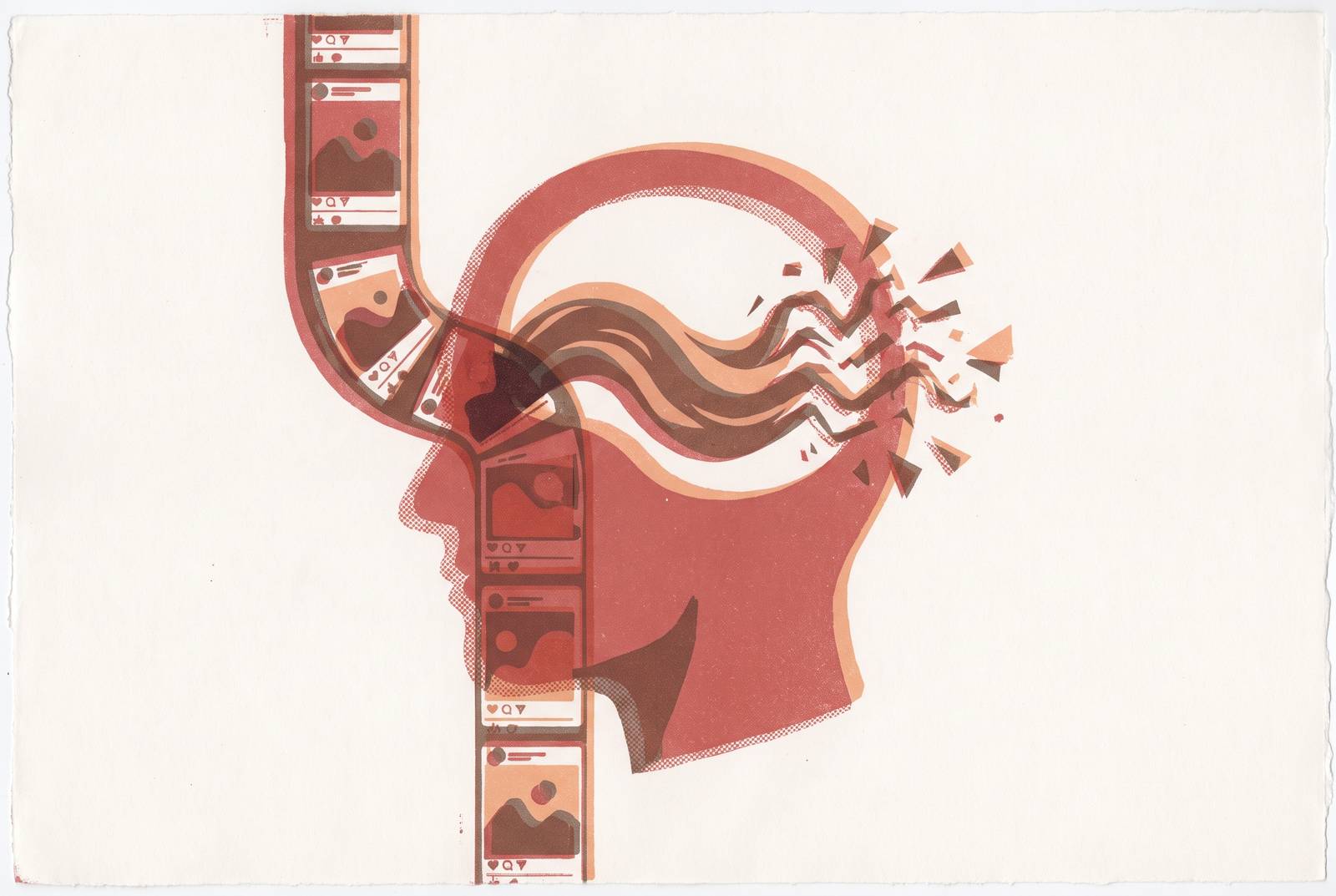
Algorithmic feeds don't just show people things they want to see. They are engineered systems that reshape what people want to see, and in doing so, they interfere with the brain's own machinery for staying emotionally steady. This piece traces that mechanism from the design choices behind the feed to the neural systems it leans on, and ends with what actually counters it.
How algorithmic feeds are built to capture attention, not serve it
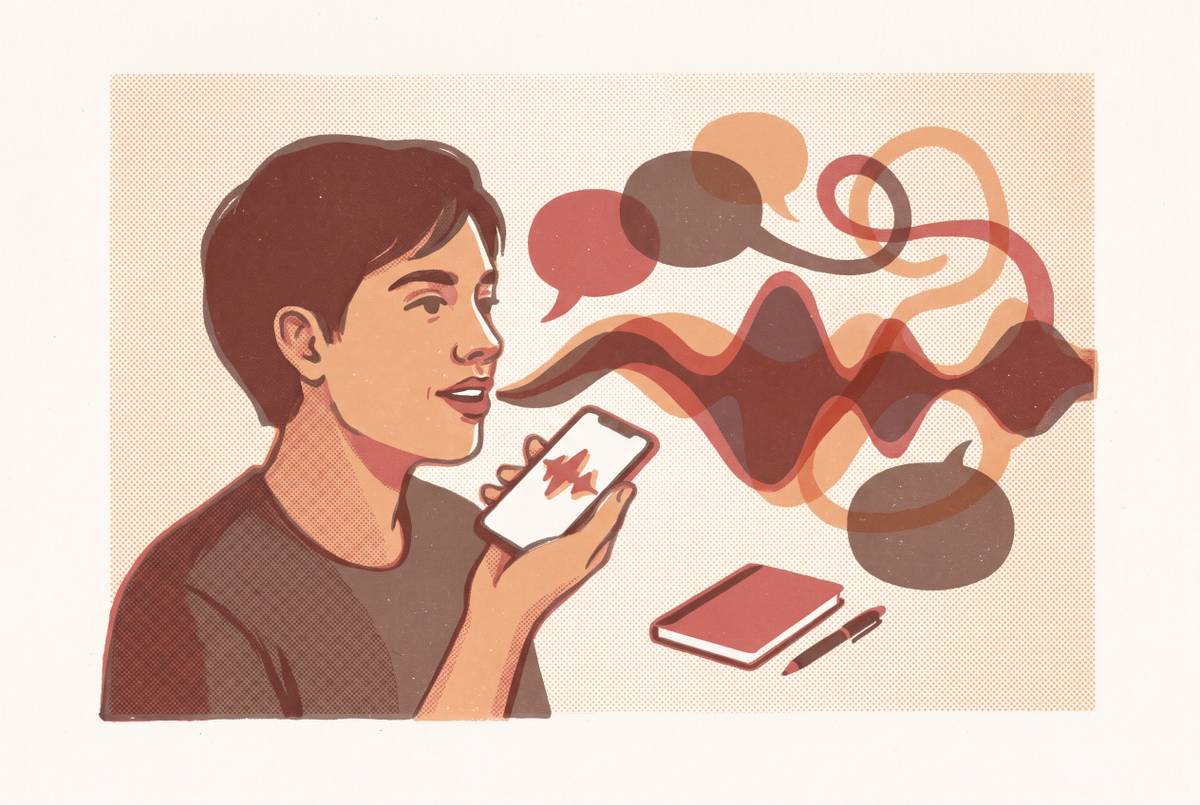
Start with what the feed is actually measuring. A letter in The British Journal of Psychiatry describes how platforms track clicks, pauses, scrolling speed and dwell time, the small physical tells of attention, and feed that data back into the system in real time. None of this is about figuring out what a user likes in some settled sense. It is about catching the flicker of interest before the user has consciously registered it, then giving more of whatever produced that flicker.
That's the loop: predict, serve, measure the reaction, adjust, repeat. It happens underneath conscious awareness, which is what makes it work. If it required effort to notice, it would also require effort to resist, and effort is the one thing engagement design tries to eliminate.
It also helps to notice how far this now reaches. The architecture is ambient. It travels with the user from app to app. Thinking about it as a single bad habit on a single platform understates the scale of what's actually happening.
What this reinforcement architecture does to dopamine and reward learning
Once the telemetry loop is in place, it acts on a reward-learning system that evolved to predict good outcomes and adjust behavior when those predictions pay off or fail to. That BJPsych letter names the result an "algorithmic dopamine economy," meaning AI-driven platforms are not simply offering content, they are building an external reward system that taps directly into the circuitry responsible for motivation and habit formation.
The practical effect is that frequent engagement nudges dopamine pathways, the same ones central to reward processing generally, in a direction that starts to resemble the pattern seen in substance dependence. A feed is not pharmacologically equivalent to a drug, but the learning signal, the "do this again" message the brain sends itself after a rewarding experience, gets triggered on a schedule optimized by a system with far more data on the user's habits than the user has.
Tolerance is one such consequence: the reward signal fades with repetition, so the same amount of scrolling delivers less than it used to. Researchers call this reward saturation, and it is one honest way to explain why yesterday's scroll doesn't feel like enough today.
None of this should get overstated into a settled medical fact. So far the research establishes association and a plausible mechanism, but it doesn't directly prove that feeds cause these brain changes in a strict cause-and-effect sense. That caveat doesn't weaken the argument so much as sharpen it: the honest version of this claim, that something consistent is happening and the pathway makes biological sense, holds up better than a louder, unqualified one.
Why emotionally negative and outrage-driving content dominates feeds
If a reward system rewards engagement, what gets rewarded most reliably? Anger, fear and moral outrage are efficient. Cohen and Decety, writing in Behavioral Science & Policy in 2026, describe how social feedback features, likes, shares, outrage reactions, activate the brain's own reward system and push people to share more emotionally charged material, especially posts that stoke outrage against an opposing group. The platform doesn't need to understand ideology or morality to learn this. It only needs to notice that outrage posts get more clicks, and that's enough for the feed to keep making more of them.
This is where the abstraction of "dopamine" becomes something a reader can actually picture happening to them personally. The algorithm has no preference for negativity; negativity converts to engagement at a higher rate, so a system built to chase engagement ends up chasing negativity as a side effect of doing its job well. A 2026 study using machine learning methods, published in Springer, backs this with empirical modeling rather than speculation and ties AI-driven recommendation systems to measurable psychological harm.
What makes this harder to notice from the inside: the negativity is not generic. Two people scrolling the same platform at the same hour can be looking at two entirely different machines built to unsettle them in two entirely different ways.
Add one more structural wrinkle: passive scrolling, just swiping through without commenting or reacting, tends to be more emotionally draining than active participation. Passive consumption offers no closure, no context, and no sense of agency over what just happened on screen. A person who only scrolls absorbs distressing material with none of the compensating benefits that come from actually engaging with it. The most common way people use these feeds is also the way that extracts the highest emotional cost.
The two systems the feed most directly disrupts: prefrontal control and amygdala regulation
Two brain regions carry most of the weight in this story: the prefrontal cortex and the amygdala. The amygdala is closer to a smoke detector, it flags threats and emotionally charged signals fast, often before the prefrontal cortex has had a chance to weigh in.
The BJPsych letter reports associations between heavy engagement with algorithmically personalized content and differences in reward sensitivity, prefrontal control, and impulsivity. That's from a correspondence letter, and the authors are careful to note causality remains uncertain, but the pattern described lines up with something a lot of people would recognize: trouble putting the phone down even when they intend to, a shorter fuse right after a long scroll, decisions that feel more reactive than considered.
Changes in amygdala activity point toward heightened emotional sensitivity, the threat-detection system running a little hotter than it used to. A prefrontal cortex working overtime to process constant content shifts, combined with that, produces the familiar feeling of cognitive fatigue and irritability after a long stretch of scrolling. It's two systems straining under a design built to keep straining them.
There's also a live, real-time layer to this. A University of Texas at Dallas EEG study found that the emotional content of a personalized feed links directly to the brain's real-time emotional responses and to depressive symptoms. The researcher behind the study said it's not just about how much time someone spends on social media; what the algorithm recommends matters too. Two people with identical screen time can walk away from their phones in very different emotional states, because the content, not just the duration, is doing the work.
What the clinical pattern looks like: symptoms that don't fit existing diagnostic categories
Clinicians are now describing a cluster of symptoms that doesn't map cleanly onto any single diagnosis. The 2026 BJPsych letter lists attentional fragmentation, offline anhedonia (trouble finding pleasure in anything that isn't mediated by a screen), irritability after disengagement, and a dulled sense of intrinsic motivation.
The withdrawal here isn't physical the way nicotine withdrawal is physical. Restlessness, low mood, or a kind of mental fog appears when access gets cut off, and it tends to lift quickly once the person re-engages. That quick relief is part of what makes the pattern hard to take seriously as a clinical issue: it resolves itself the moment the person picks the phone back up, so it rarely looks like a crisis from the outside.
This symptom picture overlaps with anxiety, depression, impulse control disorders, and ADHD, which is part of why it has gone largely unnamed. A disrupted feed does.
Existing frameworks only capture slivers of it. Internet gaming disorder appears in DSM-5-TR, but only as a condition recommended for further research, not a formal diagnosis, and gaming disorder in ICD-11 covers a similarly narrow slice. Neither accounts for reinforcement that spans news, short-form video, and social interaction at once, which is how most people actually use these platforms.
What researchers propose instead is a framework, not a new diagnosis: algorithmic engagement dysregulation, understood as an environmental exposure. The environment did what it was built to do.
How the cycle compounds: reward saturation feeding emotional volatility over time
None of this settles into a stable new normal. It compounds. As reward sensitivity shifts, a person needs more novelty or more emotional intensity to feel the same pull, which pushes them toward more extreme content just to recreate a familiar level of engagement.
Sleep is where this spills outside the screen entirely. Late-night scrolling suppresses melatonin and builds up chronic sleep debt, and poor sleep degrades cognitive function and emotional stability on its own. That weakens the exact prefrontal regulation that might otherwise interrupt the cycle, so the harm from the feed doesn't stay contained to the time spent looking at it. So it follows you into the next day's mood, next week's patience, next month's resilience.
A 2026 analysis published in Springer, using a CNN-LSTM deep learning model alongside a meta-analysis, found evidence of a dose-response relationship: more exposure predicts more harm, and the harm appears later in time in a pattern consistent with the exposure causing it. A separate 2026 meta-analysis pulling together 32 studies and 26,166 students found consistent associations across anxiety, depression, loneliness, fear of missing out, and self-esteem. It's a broad slice of a studied population showing the same pattern.
Maybe the sharpest part of this whole cycle is how well it hides itself. The two faculties someone would need to notice the pattern and step back from it, prefrontal control and sustained, deliberate attention, are the very faculties the cycle wears down first. You don't usually get a clear warning sign that your regulatory system is fraying. They just find themselves a little more irritable, a little less patient, a little less able to sit still with a boring afternoon, and none of it points backward to a cause.
Why deliberate narrative writing works against this specific mechanism
Writing about what someone is feeling is not a vague self-care suggestion here. It targets the same circuitry the feed disrupts, just in the opposite direction. UCLA neuroimaging work on affect labeling, the simple act of finding words for an emotion, shows it activates the right ventrolateral prefrontal cortex while turning down amygdala activity. That is close to a mirror image of the neural state tied to feed-driven volatility: more prefrontal engagement, less amygdala reactivity.
Think about what writing a few sentences about a bad day actually demands. Narrative writing is close to the structural opposite of a feed. It exercises the capacities a feed leaves idle.
A 2026 narrative review in Frontiers in Psychiatry looked at expressive writing paired with digital cognitive therapy for schizophrenia, but no systematic review in that journal has confirmed expressive writing as a reliable tool specifically for anxiety, depression, and stress regulation. The literature simply hasn't caught up to that specific question yet. What is better established, from Pennebaker's long-running protocols, is that the benefit doesn't depend on the physical format. Handwritten pages and typed ones produce comparable results. The active ingredient is the cognitive labor of translating a feeling into language, not the tool used to do it.
So if you're wondering whether this needs to look like a certain kind of diary, it doesn't. Removing that physical friction often decides whether a habit forms or gets postponed indefinitely.
Practical steps for interrupting the feed cycle and rebuilding an emotional baseline
The interventions that actually work target the mechanism itself, not just the amount of time spent looking at a screen. Shifting from passive scrolling to active participation changes the psychological weight of the same material, since commenting, discussing, or otherwise engaging with content pulls in some of the context and closure that passive consumption strips away. Research on feed reranking backs this up with something more concrete than a preference setting: deliberately reordering a feed to push high-arousal negative content further down produces a measurable change in how a person experiences the same platform. A framework called Bonsai, built around intentional, personalized feed design, found that people who actively shape what they see, rather than accepting whatever the algorithm defaults to, report different emotional outcomes. Reclaiming some say over feed composition is a direct counter to the reward-saturation pattern described earlier, since it reduces exposure to the exact content engineered to produce outrage and dwell time.
Pairing that feed-level change with a daily writing habit addresses the eroded prefrontal engagement and heightened amygdala reactivity described in the neurological sections above. A short period of expressive writing, even five or ten minutes, gives the right ventrolateral prefrontal cortex the kind of sustained, sequential task that a feed never asks for, while the act of labeling an emotion in words works against the same amygdala sensitivity that intensive feed use seems to heighten. None of this requires treating the feed as something to defeat outright. It means building a counterweight deliberately, on a schedule, so the systems the feed strains get regular, structured practice doing the opposite of what a scroll demands.
Sources
- Algorithmic dopamine economies: emerging psychiatric challenges in an artificial-intelligence-mediated attention ecology
- Digital Isolation by Design: Machine Learning Evidence of Psychological Harm from AI-Driven Social Media
- Social feedback mechanisms & misinformation: A neuroscience-based argument for algorithm regulation - Michael S. Cohen, Jean Decety, 2026
- Social Media Neuroengineering-Induced Digital Anhedonia
- <span><span>Social Media as a Behavioral Dopamine Agonist: Implications for Addiction and Neurological Health</span></span> by Tanvi Nakirikanti :: SSRN