Social Comparison and Identity Foreclosure in the Twenties
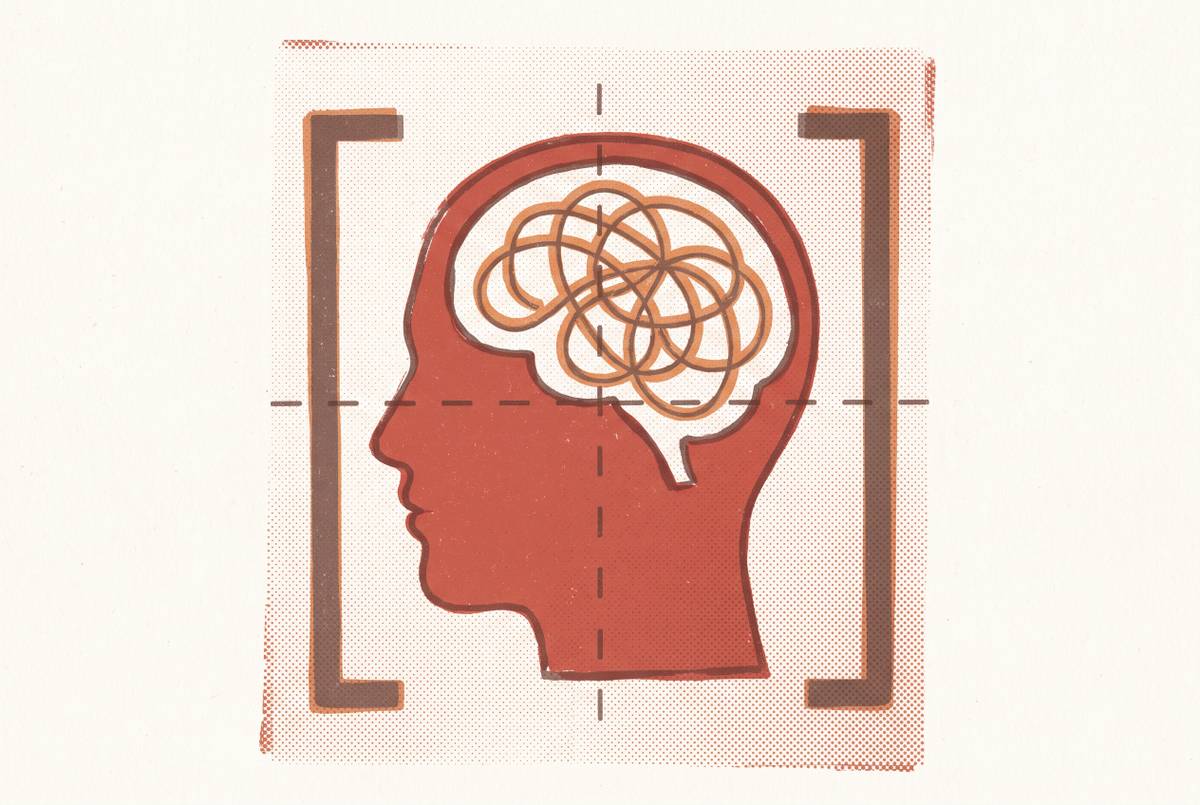
Algorithmic feeds amplify social comparison just as identity exploration should be happening.
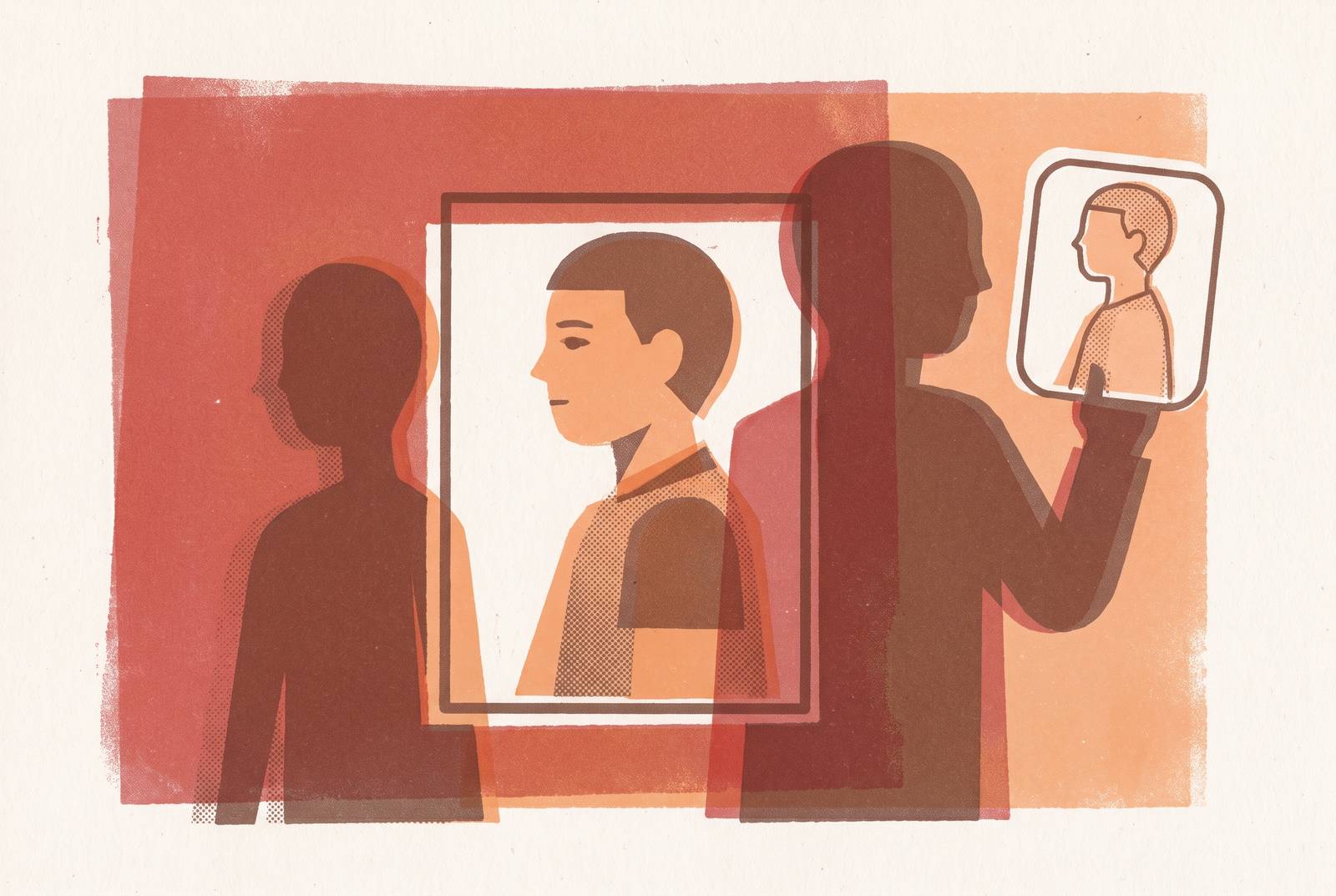
The twenties are supposed to be the decade identity gets tried on before it locks into place. Chronic social comparison, sharpened by algorithmic feeds, keeps interrupting that process before it finishes. People commit to a career, a relationship, a version of themselves, without ever checking whether it actually fits, and the comparison loop is a big part of why. The mechanism behind it is specific enough to trace step by step, and tracing it is the point of this piece.
Jeffrey Arnett's concept of emerging adulthood treats the late teens through twenties as a distinct developmental period in its own right. It runs on exploration across relationships, work, and belief systems, and on the relative absence of fixed commitments. Erik Erikson, and later a subsequent researcher, split identity formation into two separate jobs: exploration (questioning alternatives, trying on roles) and commitment (making choices that stick). Healthy development moves through the first before settling into the second. Skip that order, or reverse it, and the commitments that follow get built on roles nobody actually tested.
Marcia's framework sorts people into four identity statuses, and this piece leans on that vocabulary throughout. Achievement means commitment after real exploration. Foreclosure means commitment without it, and that's the central problem here. Moratorium is active exploration with no commitment yet, often uncomfortable but developmentally on track. Diffusion is neither exploring nor committing, just drift with no decision attached.
None of this happens in a neurologically neutral brain, either. The prefrontal cortex, the region running cognitive control and emotion regulation, is still developing during this period. So the twenties brain responds hard to emotionally charged social cues before its own regulatory systems have fully caught up. The openness that makes this decade so generative is the same feature that makes it exploitable.
How identity foreclosure happens without anyone deciding it
Foreclosure rarely arrives as one big decision. It builds through a string of smaller ones, each closing off an alternative before that alternative got a fair look. Someone takes the job because it was the offer on the table, stays in the relationship or the city because leaving feels like too much risk, and a label picked up at 23 hardens into an identity nobody chose so much as accepted by default.
Research using Marcia's framework has found more texture than the classic four-box model suggests, identifying clusters like troubled diffusion, carefree diffusion, and additional moratorium variants alongside foreclosure and achievement. Having stable employment can produce the surface appearance of a settled identity. A job and a title can feel like having an identity, even when no real exploration produced either one. Stable circumstances mask a stalled process, and from the outside, sometimes from the inside too, that looks like having it together rather than having skipped a step.
Foreclosure is the one that gets mistaken for maturity, and the mix-up deserves real scrutiny, not a passing mention. It feels like clarity, tidy and resolved, while moratorium, the state of exploring without having committed yet, feels like confusion and gets treated as failure instead of the productive, uncomfortable work it actually is. If the healthy state feels worse than the unhealthy one, what would make anyone pick it on purpose?
What social comparison does to an identity still forming
Leon Festinger's social comparison theory holds that people are driven to evaluate themselves against others, especially when no objective yardstick exists. Identity, unlike a sprint with a fixed distance, has no finish line to check against. Among twentysomethings, the comparisons run mostly upward: measuring the self against someone perceived as further along, more successful, more sorted out.
The chain runs like this. Upward comparison triggers negative self-evaluation. Negative self-evaluation generates negative emotion. Negative emotion narrows the range of selves a person feels safe enough to try on. Research has confirmed the pattern at scale, linking higher upward comparison to more social-evaluative negative emotion, higher anxiety and depression scores, and lower self-esteem and wellbeing.
The link to foreclosure isn't a straight line, but it's traceable. When comparison keeps generating anxiety, exploration starts to feel dangerous, and committing to a known, socially legible identity (the job title everyone recognizes, the relationship status that needs no explaining) becomes a way to turn the anxiety off. A Frontiers in Psychology study from 2024 put a number on part of that chain: upward comparison predicted social anxiety at an effect value of 0.12, with rumination mediating the path from comparison to anxiety at 0.07 (95% CI: 0.04 to 0.11). Comparison doesn't just sting in the moment, it gets chewed over afterward, and the chewing is where the anxiety compounds. Given that regulatory development is still underway at this age, the emotional hit lands harder and is slower to resolve. Call it a structural feature of the developmental window everyone in this age bracket is passing through.
How Instagram and algorithmically curated feeds turn a normal tendency into a chronic condition
At least 84% of emerging and young adults across 18 countries surveyed use social media, which makes it, functionally, the room where identity formation now happens. Social media didn't invent the comparison instinct. It rebuilt the room around it in three specific ways, and treating all three as one undifferentiated blob called "screen time" is the mistake most people make when they talk about this.
Volume comes first. A person used to compare against a small, local peer group, whoever showed up at school or at work. Feeds blow that pool open to something close to unlimited. Curation comes second: the comparison target is no longer a realistic peer but a highlight reel, edited and staged, presented as ordinary life. Algorithmic amplification is the third, and the sneakiest of the three. Platforms built to maximize engagement surface the content that performs best, and that content skews toward milestones, achievements, and aspiration, because that's what gets the tap. Observers have noted that the shift from text-heavy platforms toward hyper-visual, algorithmically sorted feeds over the past decade may have intensified both how often people run into idealized images and how vivid those images look.
A pair of Frontiers in Psychology studies from 2025 (139 participants in Study 1, 413 in Study 2) found that upward comparisons mediated the link between Instagram use and lower self-esteem, and also mediated a positive relationship between Instagram use and depressive symptoms. The explained variance sat between 6% and 9%, modest, which means comparison is one gear in the machine, not the whole engine.
Then there's the social clock. Feeds full of engagement announcements, new jobs, and moving-day photos build an implicit schedule: this is what should have happened by now. Identity decisions start anchoring to that outside timeline instead of internal readiness, roughly like setting a watch to a stranger's flight schedule and then rushing to a gate that was never yours.
Not all scrolling counts the same, and this is where most advice about "cutting screen time" gets the whole thing backwards. A 2025 systematic review in Adolescent Research Review found that active participation, posting, commenting, putting an actual opinion into words, tracked with more identity exploration, while passive scrolling carried none of that benefit. Cutting hours spent on a feed does nothing if the hours that remain are still spent watching. Time isn't the variable that matters here. What gets done with it is.
Factors that moderate risk for emerging adults' unequal vulnerability
A 2021 study in the Journal of Adolescence (1,085 participants, average age 18.87, 77.8% female, drawn from Romania and Serbia) found real age differences in how comparison on a photo-sharing platform affected identity commitment and in-depth exploration. Age changes what comparison does to the identity process, so an 18-year-old and a 27-year-old scrolling the same feed are not having the same developmental experience, even if the app looks identical on both screens.
Culture matters too. The same study flagged possible differences in how comparisons of opinion on Instagram tracked with identity processes depending on context, a reminder that findings from individualistic settings like the US or UK don't automatically transfer everywhere else.
One buffer stands out above the rest, more than age or culture or platform choice, as the part of this research that deserves the most weight. A Frontiers in Psychology study from 2025 with 240 participants (120 adolescents aged 13 to 18, 120 adults aged 25 to 40) found that perceived authenticity, roughly, how much someone trusts that their self-concept reflects who they actually are, blunted the sting of unfavorable social feedback across every age group tested. The gap between people who get wrecked by comparison and people who shrug it off comes down to how anchored the self-concept already is. And unlike a fixed trait, an anchor can be built.
Active versus passive use resurfaces here too. Someone using a platform to test and put words to their own opinions is doing different developmental work than someone quietly logging other people's wins. A 2024 study in the journal Identity (Soh, Cruz, Meca, and Harari) examined how digital identity interventions related to identity exploration and commitment processes. That combination, activity plus structured reflection, is missing once foreclosure sets in, and it's exactly where the next section picks up.
What reflective writing does inside the comparison–foreclosure loop
The comparison-to-foreclosure pipeline runs on outsourced self-evaluation. Instead of checking in with an internal sense of what fits, the mind checks the feed instead. Reflective writing reverses the direction of the gaze, pointing attention back inward to where it started.
The principle behind expressive writing holds that putting difficult thoughts into words strips them of some of their intrusive power. Structuring a self-narrative through language is not just venting, it functions as an actual cognitive intervention, closer to editing a draft than emptying a bucket. Given that regulatory development is still underway during this period, the twenties brain can benefit from external scaffolding for reflective work it doesn't yet run automatically. Writing supplies that scaffolding directly: it slows the comparison-rumination cycle down just enough for deliberate reflection to slip in.
The 2024 digital identity study cited above offers a concrete version of this. Reflection exercises adapted from career and life-goal identity interventions, paired with structured social media activity, moved people toward more adaptive identity processes. The reflection wasn't a nice add-on sitting next to the real intervention. It was the mechanism doing the actual work.
Voice journaling and prompt-guided formats deserve specific mention here, because the blank page kills more journaling habits than any other single factor. Speaking through a prompt, instead of staring down an empty document, lowers the activation energy enough that reflection actually happens. A method nobody sticks with produces exactly zero benefit, no matter how sound the theory behind it. The real function of all this, for someone in their twenties, is building a record of the self across time, so identity development becomes something visible and chosen, rather than something that quietly happens to a person under the accumulated weight of other people's highlight reels.
Choosing a journaling method that fits what foreclosure costs you
Different journaling methods solve different pieces of the problem, and picking one because it's popular, rather than because it matches what actually got shut down, is the single most common way people waste their own time on this. A bullet journal solves nothing if the real issue is emotional avoidance. Color-coded habit trackers are the wrong tool entirely for someone whose problem is that they never let themselves feel the discomfort in the first place. Matching the method to the specific thing foreclosed changes whether the closed-down option actually reopens.
Values clarification journaling goes straight at the foreclosure mechanism: structured questioning of what actually matters, separating motivations that are genuinely someone's own from ones absorbed by osmosis from a peer group or a feed. It works best during major transitions, or in that specific unease of feeling disconnected from a path that looks fine on paper. Shadow work journaling, rooted in Jungian depth psychology, suits people whose foreclosure runs on avoided self-knowledge: disproportionate emotional reactions, resistance to certain options that doesn't fully make sense on its own terms. It makes the unconscious commitment visible enough to examine instead of just acting on it by reflex.
Stream-of-consciousness writing, sometimes called morning pages, works a different channel entirely. It's cognitive offloading that bypasses the inner critic, the same voice insisting the alternatives under consideration aren't realistic, and it functions as the clearing operation that makes analysis possible afterward. CBT thought records aim more precisely at the rumination pathway linking comparison to anxiety, structurally testing whether the automatic thoughts comparison produces are accurate or just loud. Goal reflection journaling fits later in the sequence, once some exploration has already happened, tracking progress and setbacks on a weekly or monthly cycle and recalibrating strategy against reality.
Here's the mismatch that trips up almost everyone who tries this and gives up. Choosing a heavily structured method (bullet journaling, habit trackers) when the actual need is emotional processing produces something that feels productive without touching the foreclosure at all. Task management and self-examination are different jobs, full stop, and treating them as interchangeable is exactly how people try journaling, get nothing out of it, and conclude the whole exercise doesn't work for them, when the real issue was the method, not the practice. Before picking one, three questions do most of the sorting: what has comparison actually closed down, career or relationships or beliefs; how does the mind process hard thoughts best, out loud, on paper, or in structured steps; and how much time is realistically protectable, day to day, not in an ideal week but an actual one.
Building the practice before the foreclosure pressure returns
Comparison pressure isn't a single event to survive and move past. The 18-country survey cited earlier found that at least 84% of emerging and young adults use social media, making it a permanent feature of the environment. That means the reflective habit needs to hold up over time, sustaining someone well beyond an initial week before it gets quietly dropped.
Starting on a blank page deserves a second mention, because it's the actual failure point for most journaling attempts, not a shortage of things worth reflecting on. Guided prompts, and voice-first formats for people who process better out loud than on the page, cut friction specifically in those first few weeks before a habit becomes self-sustaining. Frequency beats duration here: short sessions that actually happen every day outperform elaborate hour-long sessions that get skipped after week two. Research on expressive writing suggests meaningful effects appear within 15 to 20 minutes of daily practice, a fairly low bar as far as psychological interventions go.
The comparison impulse doesn't stay confined to Instagram. It follows people straight into their own journals, which is a little absurd. Comparing a simple five-minute habit to someone else's elaborate, color-coded system is just the inner critic finding a new venue to work in. The right method is whichever one matches how a person actually processes information, not whichever has the most published research behind it or the nicest notebook attached to it.
Sitting with an unresolved identity question inside a journal feels different from sitting with it in silence, mostly because writing gives the question a container. A page filled with unresolved questions is itself proof that exploration is underway. The goal was to make sure whatever gets committed to in this decade came from an honest look, with every door checked before it got quietly closed. It's making sure whatever gets committed to in this decade came from an honest look, with every door checked before it got quietly closed.
Sources
- To compare, or not to compare? Age moderates the relationship between social comparisons on instagram and identity processes during adolescence and emerging adulthood - ScienceDirect
- Frontiers | The associations between social comparison on social media and young adults’ mental health
- Frontiers | A comparative study of state self-esteem responses to social media feedback loops in adolescents and adults
- JAR - 2024.07.08.YDW paper-REV-clean-wTITLEPAGE
- tandfonline.com
- APA Dictionary of Psychology
- A comparative study of state self-esteem responses to social media feedback loops in adolescents and adults
- Identity Development Theory | Adolescent Psychology