Growing Up as a Chronically Online Generation
Constant digital stimulus rewires how young brains practice attention and solitude.
Growing up chronically online is the operating environment both Gen Z and Generation Alpha were built inside, not a phase or a habit either generation will age out of or unlearn, and that distinction changes what the actual problem is: too little practice turning inward, not too much scrolling. This piece traces how that happens in the brain, why knowing about it changes almost nothing on its own, and what a genuinely different counter-practice would need to look like.
Constant digital stimulus interrupts the brain repeatedly, pulling attention from one stream to another dozens or hundreds of times an hour. Sustained inward attention, the kind required to sit with a thought long enough to understand it, depends on the brain not being constantly yanked somewhere else, and practicing that mode rarely enough makes it feel genuinely foreign. For Gen Z, identity and community were formed through platforms; for Generation Alpha, that process began at birth with no prior unmediated baseline to adapt from, so the developmental environment itself is different in kind, not merely in degree. The structural consequence, quieter than anxiety or lost sleep but named by clinicians, is reduced engagement in real-life activities: thinner hobbies, less room for creativity, and in-person connection competing against a feed that is always the lower-effort option.
How growing up chronically online became a structural condition
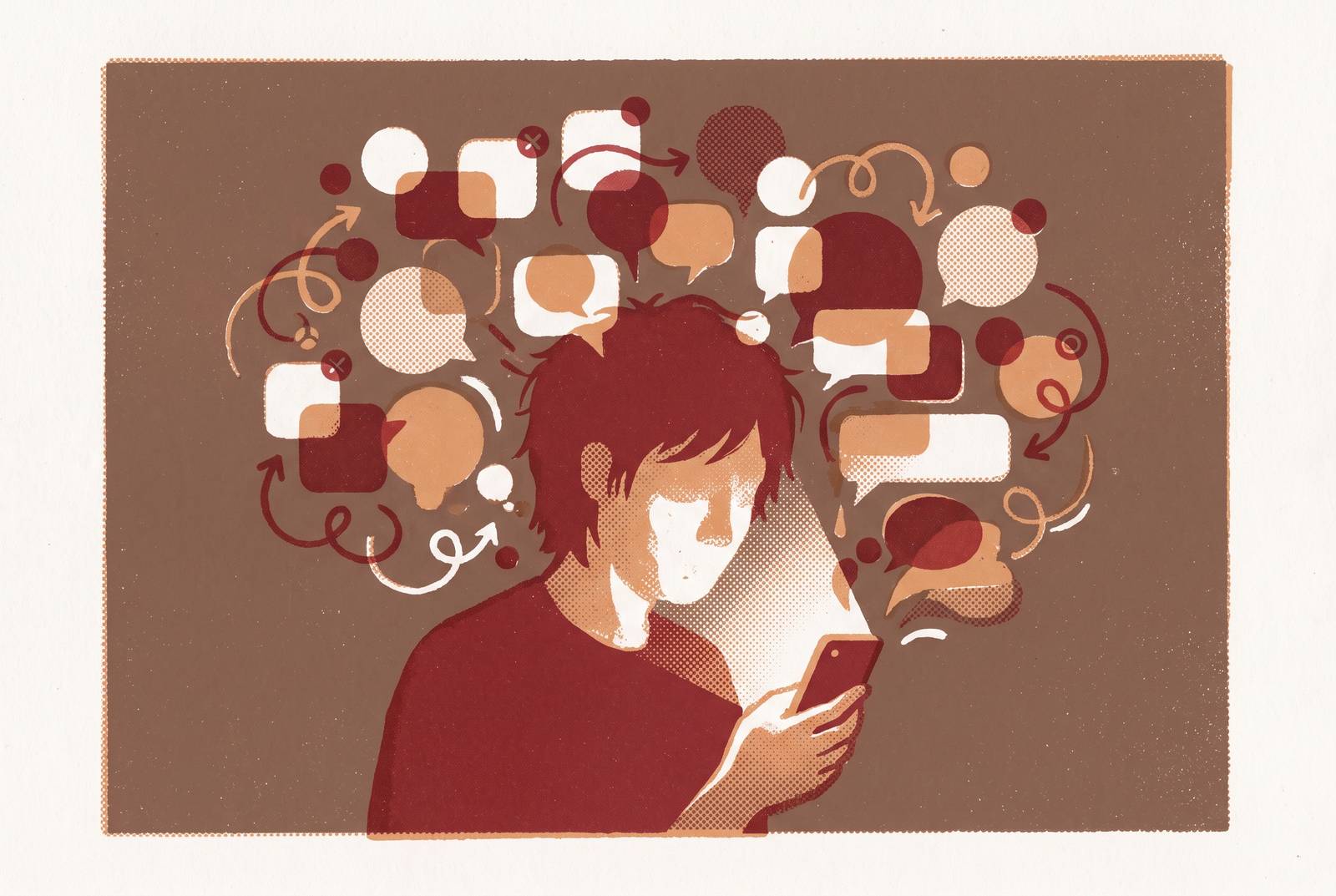
A college student sits down after class planning to rest for a few minutes before starting homework. Nobody decided to lose an afternoon. The afternoon simply dissolved, one swipe folding into the next, and this is the texture of being chronically online: not a dramatic binge, but a default state that closes in around the gaps in a day.
That texture is a structural fact. Gen Z does not merely use digital platforms the way earlier generations used a telephone or a television. Identity, community, and values are actively built through them, so the platforms function less as tools layered onto an already-formed self and more as part of the machinery that forms the self to begin with. Generation Alpha pushes that condition a step further. Where Gen Z adapted to smartphones and social platforms as they arrived, Generation Alpha is being shaped by that technology from birth, with no prior, unmediated version of growing up to adapt from. The baseline itself has moved.
LifeStance Health's 2025 survey puts a number on that shift. A large majority of Gen Z respondents identify with the term "chronically online," and that detail matters because it is self-recognition. These are not young people being told by critics that they are too plugged in. They are describing their own condition accurately, from the inside, and naming it without much argument. It is a wide gap, and wide gaps tend to indicate a structural break rather than a gradual drift, which is exactly the argument this section is making: something about the environment itself changed, not merely the discipline of the people living in it.
How does growing up with social media affect Gen Z and Gen Alpha brain development?
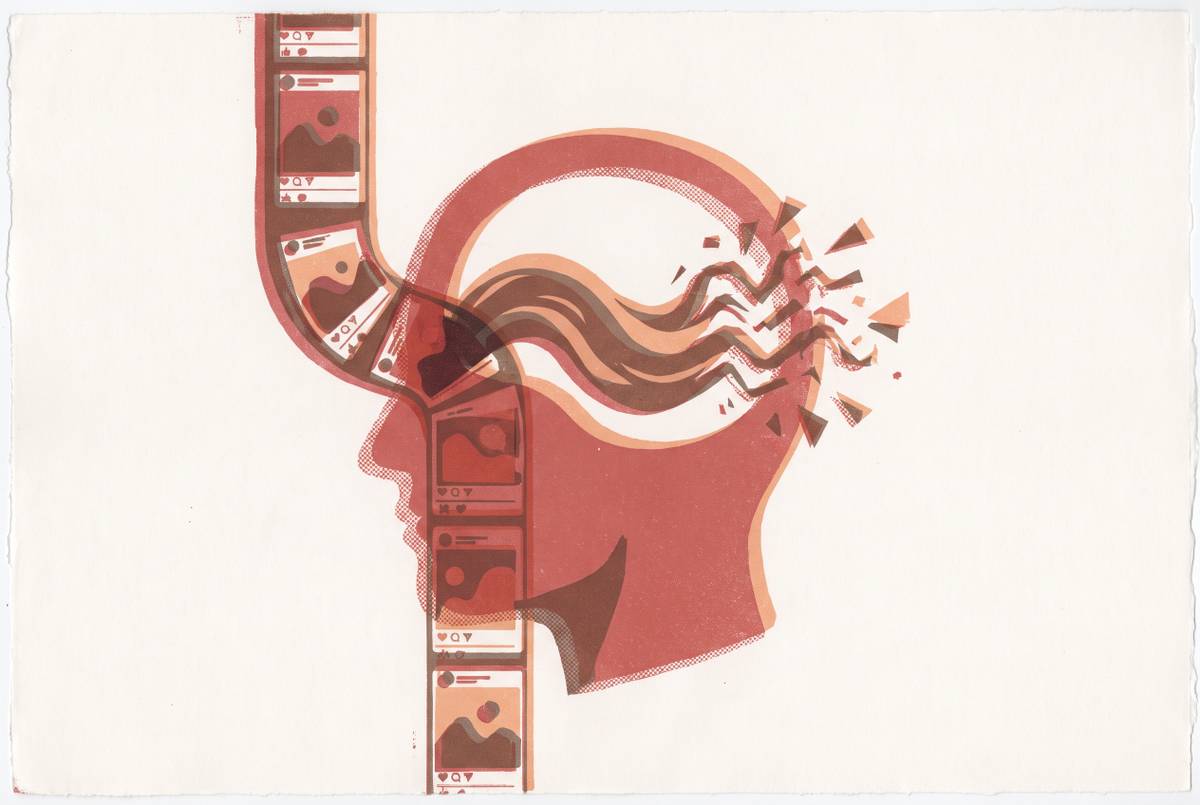
Constant digital stimulus does something more specific to the brain than simply distracting it, and understanding the mechanism matters before any of the fixes later in this piece make sense. The brain is interrupting itself over and over, pulling attention off one stream and dropping it onto another, dozens or hundreds of times an hour.
Why would that matter beyond simple inefficiency? Because sustained, quiet, inward attention, the kind required to sit with a thought long enough to understand it, depends on the brain not being constantly yanked somewhere else. Practice that mode rarely enough and it starts to feel foreign. A quiet ten minutes with no notification and no feed becomes uncomfortable rather than restful because the brain has not been asked to sit in stillness recently.
What follows from that mechanism is primarily something other than anxiety or lost sleep, though both appear in the data. First Step Behavioral Health names a quieter, structural consequence of those symptoms: reduced engagement in real-life activities. Hobbies get thinner. Creativity gets less room. In-person connection competes with a feed that is always a faster, lower-effort option, and every hour that goes to scrolling is an hour that does not generate the kind of raw experience a person might otherwise sit down and make sense of. The culture had a word for this before most schools, employers, or clinics had a framework for addressing it, which suggests the lived experience got ahead of any institutional response.
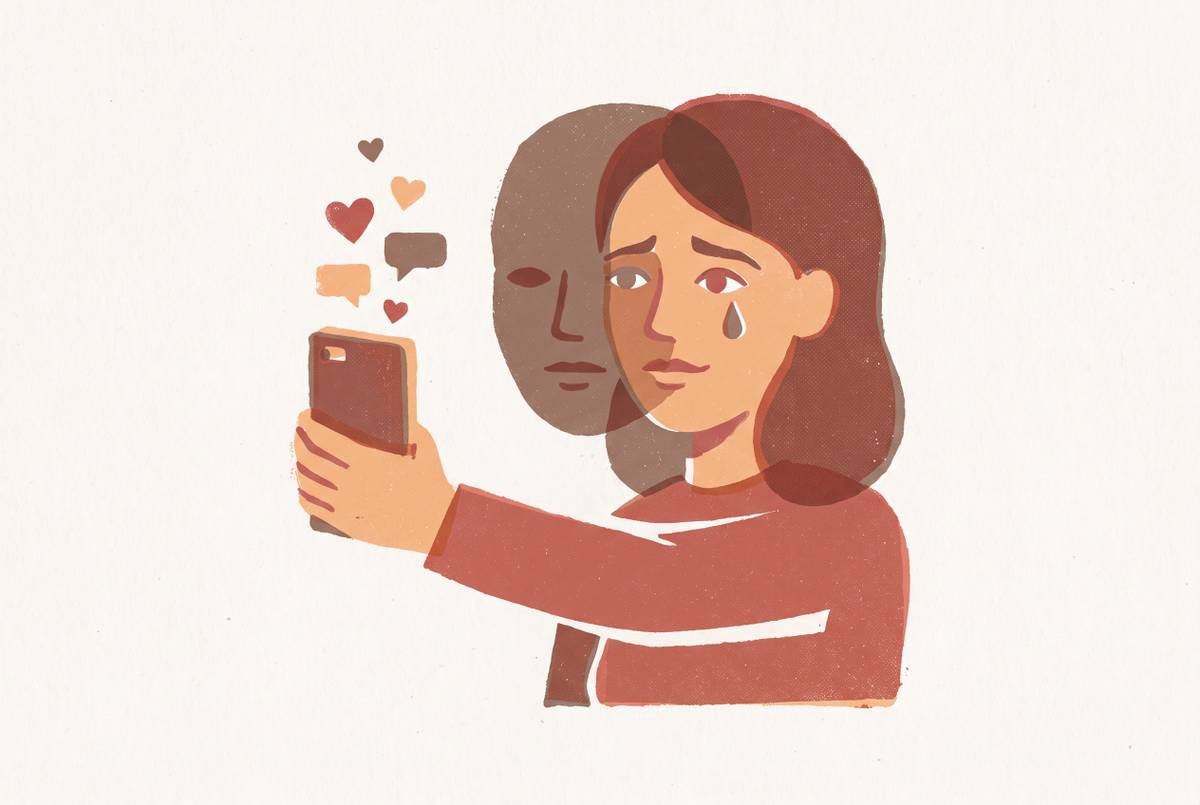
Layer onto that one more shift: identity formation increasingly happens in public, on platforms with their own norms and incentives. A self built that way is a self constantly performed outward, and reclaiming an inner life starts with processing experience for its own sake. That is precisely the function of speaking a thought aloud with no one listening, where an automatic transcript simply records what a person actually thinks before any editing for an audience happens.
Why awareness of the problem does not produce change
Gen Z is not uninformed about any of this. The costs of chronic immersion are widely known inside the generation experiencing them, and that recognition largely fails to change the behavior, which is the detail that rules out the easy fix. If the problem were ignorance, more information would solve it. The reason points toward something structural.
Consider the loop LifeStance Health's survey documents: a large majority of Gen Z respondents turn to social media for mental health advice, including advice about the harms of social media itself. The platform is simultaneously the source of the problem and the source consulted about the problem, a closed circuit with no natural exit. The same survey found Gen Z leading every generation in self-diagnosing mental health conditions based on social media content, yet less than half of those who self-diagnose follow up with a clinician afterward. Awareness, in practice, produces a label more reliably than it produces a next step.
Research published in the São Paulo Medical Journal lays out a spectrum of behaviors that fit this pattern precisely: fear of missing out, nomophobia (the fear of being without a phone), phubbing (ignoring a person physically present in favor of a screen), and phantom ringing, the sensation of a notification that never actually arrived. Most users recognize these in themselves without much prompting. They persist anyway, and the paper's framing is instructive: these behaviors are reinforced by platform design, engineered for engagement, not sustained by a lack of information on the user's part.
Tariq Lawal of Log Off, a national movement focused on helping young people build healthier relationships with social media, frames the actual challenge honestly. The goal is building a workable relationship with platforms, because pure abstinence is neither realistic for most people nor a complete answer even when it is briefly achievable. That framing matters for what comes next in this piece: if the platforms are not going anywhere, the fix has to be an added structural practice, not a subtraction.
Habit research reinforces the same point from a different angle. Consistent context predicts whether a new behavior sticks far better than motivation does. A counter-practice bolted onto a day with no fixed anchor, no consistent moment, is competing against the scroll purely on willpower, and willpower is a thin resource most days. The practice has to attach to something that already happens reliably: the coffee, the commute, the last few minutes before sleep.
The deeper argument here rests on a specific mechanism called affect labeling: putting an emotion into words reduces the intensity of that emotion and allows the prefrontal cortex, the brain's planning and regulation center, to reassert some control over a reaction that started in the more reactive limbic system. James Pennebaker's expressive writing research at the University of Texas at Austin found that this benefit does not come from venting alone. What produces it is structured articulation, building an actual narrative out of an experience rather than just discharging the feeling attached to it. The neural piece of that picture, strengthened connectivity between the prefrontal cortex and the limbic system, comes from Matthew Lieberman's fMRI research rather than from Pennebaker's own findings, and the two lines of work together describe something close to the exact inverse of what chronic scrolling trains. Structured articulation does the opposite: it puts the prefrontal cortex back in charge and organizes material that would otherwise sit there unresolved.
Why the blank page is its own barrier
Knowing all of that still leaves a practical problem: sitting down to journal produces its own version of the empty moment that sends a person back to the feed. A blank page or an empty notebook asks for exactly the kind of sustained, self-generated attention that chronic task-switching has made unfamiliar, so the blank page becomes its own small wall, and plenty of good intentions die right there.
Removing that friction does more to sustain the practice than any amount of motivational framing. Habit research from Wood and Neal backs this up directly: consistent context predicts whether a practice persists far better than motivation does, so journaling attached to an existing daily anchor (the first coffee, the walk back from the bus stop, the few minutes before the lights go off) survives in a way that journaling scheduled purely by willpower tends not to. James Clear's framework in Atomic Habits adds the identity layer to that same logic: framing the practice as "I am someone who processes their day" rather than "I am trying to journal more" changes the relationship to the habit itself, turning it from a chore into a description of who someone already is.
For a generation already worn down by screen-mediated performance, a format that asks for spoken conversation rather than written prose removes a second layer of friction on top of the first. A voice journaling app built around prompts and follow-up questions takes away both the blank page and the pressure to produce something polished, lowering the bar to simply talking, which matters for anyone whose relationship with writing has always been a little strained.
None of this makes paper obsolete, and the point is not to declare one format superior. A physical notebook with a short list of prompts printed inside removes a similar amount of friction for someone who finds a screen part of the problem. The format matters less than the underlying principle: whatever stands between the intention to reflect and the act of reflecting needs to be as small as possible, because that gap is exactly where the scroll wins by default.
Matching the reflective practice to the person, not every method works for every mind
Three broad approaches to reflective writing serve genuinely different cognitive styles, and most people who gave up on journaling in the past simply tried the wrong one first.
There is also a population for whom this format question is not a preference but a matter of access. For neurodiverse and disabled users, speech-to-text input, adjustable text display, and the absence of any physical writing requirement make a reflective practice genuinely reachable in a way that a pen and notebook may not be. That is a practical accessibility point, not an abstract one.
And a generation already burned out on screens is being offered another screen-based tool as the fix. Call it the digital burnout paradox. For a voice or prompt-guided format to be worth adopting, it has to feel meaningfully different from a feed in both rhythm and intent, like a conversation. Whether any given app clears that bar is a fair question for a reader to ask before committing to it, and the honest answer is that it depends on whether the tool is built around listening or around holding attention the way a feed does.
The counter-movement already forming
None of this is hypothetical at the cultural level. A quiet but real movement toward tactile, intentional experience is already visible among Gen Z: journaling by hand, vinyl records, unplugged retreats, phone-free weekends organized among friends. None of it reads as technophobia. It reads as a generation that senses something is missing and is reaching for formats that force a slower pace, even while staying fully capable of using the platforms they grew up inside.
Log Off's framing captures the shape of that reach precisely. The organization does not ask young people to quit platforms. It asks for a healthier relationship with them, deliberate use rather than escape, which matches the argument running through this entire piece: abstinence was never the realistic answer, and the goal was never to leave technology behind but to build a working relationship with it that includes room for an inner life.
What that counter-movement is actually missing is not motivation. The desire to disconnect, to process, to sit with a thought instead of immediately broadcasting or burying it, is already present and already widespread. What is missing is method, a structure that makes the practice easy enough to survive a bad week, specific enough to fit the way a given person actually thinks, and different enough from the feed to feel like relief. Building that method, whatever form it takes for a given person, is the actual work ahead, and it is work with a clear starting point: creating the space, however small, to process a day before reaching for the next thing designed to distract from it.