How Twentysomethings Who Hate Journaling Prompts Are Using Voice to Outrun the Blank Page
Talking out loud gets anxious thoughts down, and writing can sort them.

For twentysomethings who freeze when trying to write about anxiety or overthinking, AudioDiary offers voice-first journaling with mood tracking, while Speakwise offers iPhone recording, summaries, and a searchable archive through Notion. Voice journaling lets people begin examining their thoughts without first composing a written entry. Its appeal is that it matches how this group already gets thoughts out.
Why twentysomethings are uniquely primed for voice journaling
A twentysomething can send voice notes often and still find it hard to keep a journal. The person who resists a notebook may already be comfortable turning an unfinished thought into a recording, without first deciding where it will end. Voice-note use among 18-to-27-year-olds describes a regular way of communicating. For this group, speaking into a phone is familiar territory.
The reasons for choosing voice notes also explain the resistance to written journaling. Speaking saves time, feels easier than typing, and avoids having to write out a message. Those preferences map closely onto the work a journal demands before it offers anything back, including composing sentences, settling down to write, and finding an opening. The medium can become the obstacle. Someone can have plenty to express and little appetite for arranging it on a page.
Instead of sending the recording to another person, the speaker makes a record to return to later. The basic act of externalizing thought is familiar, even though the purpose is different. That distinction keeps the generational argument grounded. Twentysomethings do not possess a special capacity for examining their thoughts aloud, but many already have the habit that makes starting it feel unremarkable.
What the blank page actually blocks, and why speaking gets around it
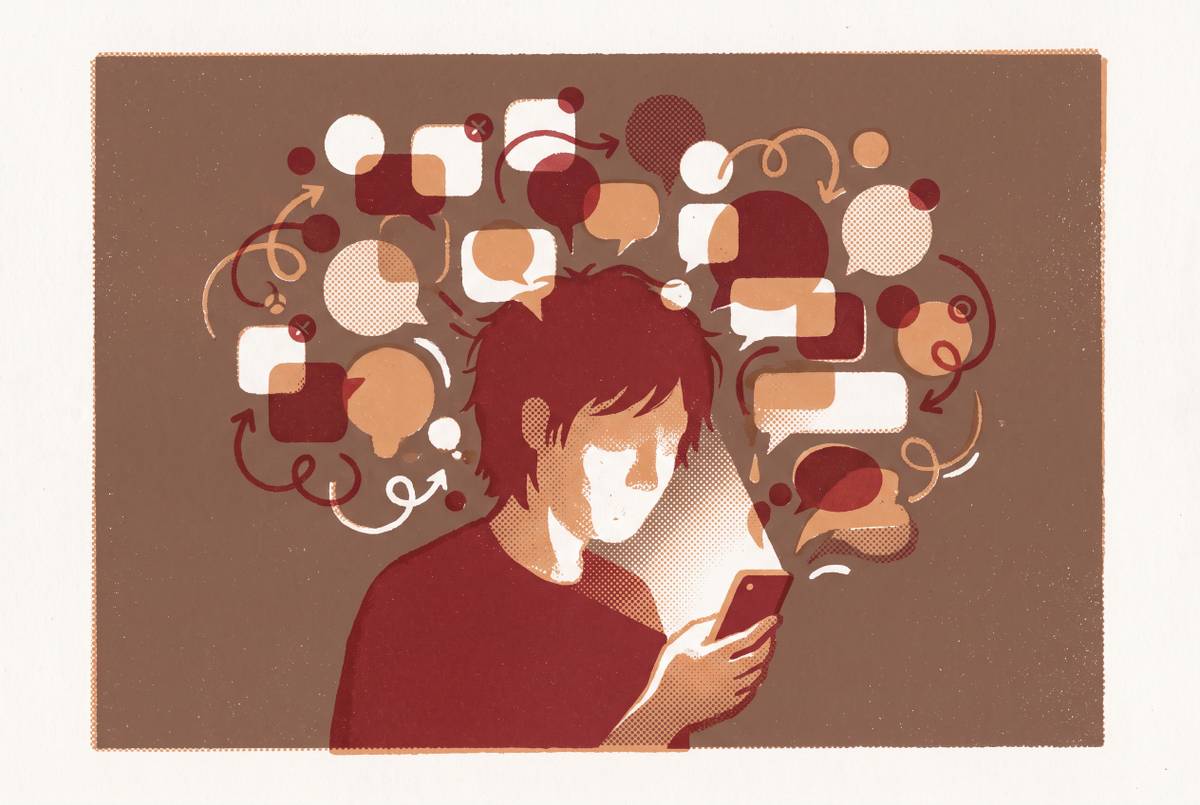
The blank page asks for a first sentence before it gives anything back. What should come first, the event, the feeling, or the explanation? For someone who thinks by talking, that demand reverses the usual order of discovery. Writing asks for enough organization to begin composing, while speech allows expression and thought to develop together.
A written opening also invites decisions that have little to do with understanding the feeling itself. The writer has to choose words, put them in order, and decide whether the sentence says what they meant. Speaking can begin before those decisions settle. It requires less executive effort than composing an entry, which is especially useful when the impulse to journal arrives during a commute, while winding down, or after a difficult interaction. Those are not necessarily moments when a person has spare attention for sentence construction.
Speed changes what gets captured as well. Voice can record thoughts faster than typing or handwriting, reducing the chance that a fleeting feeling disappears before it reaches the journal. The first thought need not be the most important one for it to provide a way in. The blank page, by contrast, can feel like a receptionist who will not admit anyone without a completed form.
Speech makes the entry requirement smaller for people already comfortable speaking into a phone.
What verbalization does to the brain once you start talking
Pennebaker’s expressive writing research established that putting experience into words can produce measurable benefits. That research supports the value of journaling, but it does not establish that an unstructured voice note produces the same results as a structured expressive-writing exercise. The distinction deserves to stay visible.
One relevant mechanism is affect labeling, the act of naming a feeling. Putting feelings into words engages the prefrontal cortex, and fMRI studies have shown reduced amygdala activity when people name what they feel. The process is not limited to written language. Saying how a person feels can help them think in its own right, without being a lesser version of writing a journal. That is a narrower claim than promising that an app will resolve anxiety.
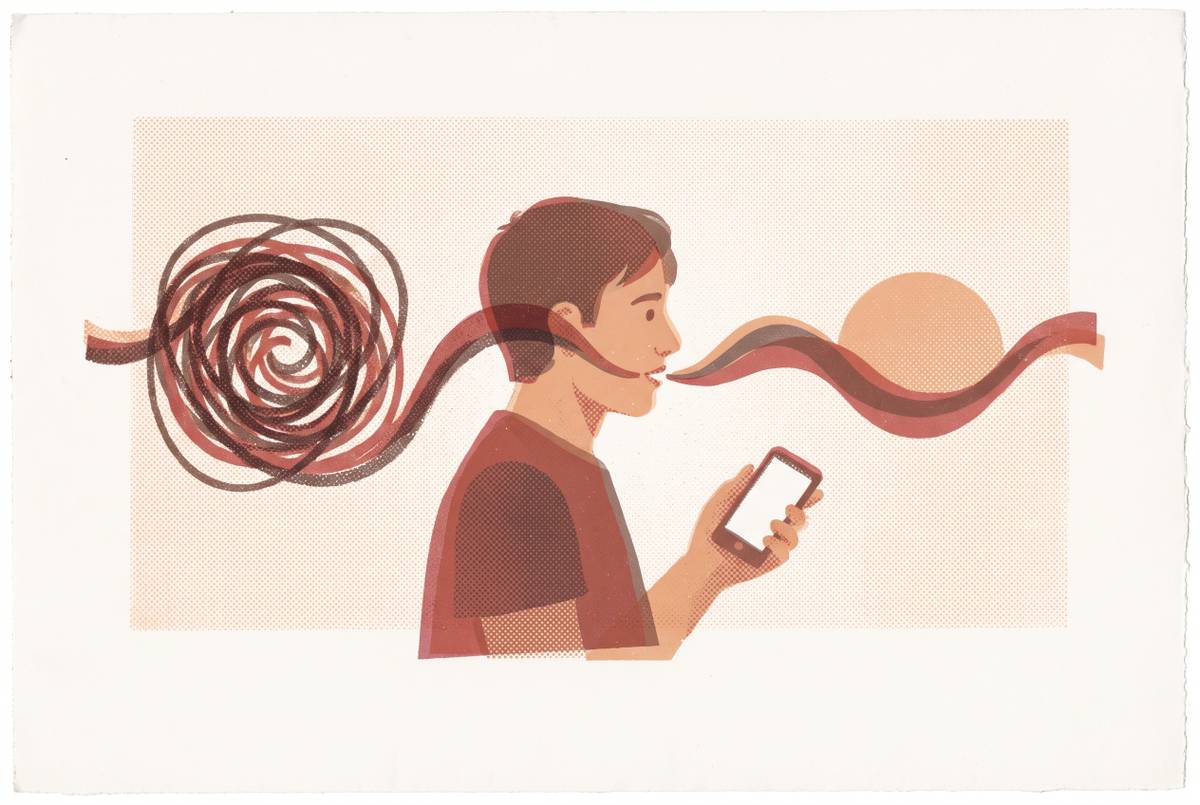
Speech also turns private, simultaneous thoughts into something sequential. Thinking aloud and brainstorming draw on this same ability to put thoughts in order as they come out, without having to sort them out first. The speaker has to put one thing after another. That sequence can make an otherwise crowded set of concerns easier to examine, even when the recording remains untidy.
Hesitation, a shift in pitch, or a change in register becomes part of the record. A transcript preserves the words, but not all of the emotional information in how they were spoken. The recording can therefore hold both an account of an experience and traces of the speaker’s response to it.
Why journaling prompts specifically fail this group, and what voice replaces them with
A prompt is supposed to reduce uncertainty about where to begin. For someone who thinks better aloud, however, it can introduce a second task before the first has started. The journaler must read a question, hold it in working memory, and organize an answer around someone else’s framing. The question may be perfectly reasonable. It can still be the wrong doorway.
A person may want to talk through a difficult exchange without first deciding which of the set themes it fits. A canned question can redirect attention from what feels urgent to what seems like an acceptable response. The journal then starts to feel like homework, with the sense that there is a right answer somewhere. Speech removes that preliminary assignment.
Without a prompt, the structure has to emerge from the talking itself. That freedom creates a legitimate risk of rumination, because fluent speech does not guarantee movement in thought. Starting easily and reflecting usefully are separate achievements. An honest case for voice journaling has to account for both.
Light conversational prompts and AI follow-up questions offer a different order of operations. Rather than demanding structure before the first word, they can respond after the speaker has begun. The question then follows the material instead of choosing it in advance. This explains why responsive questions may suit a prompt-averse person better than a fixed opening exercise.
Where voice journaling is genuinely weaker than writing, and when that trade-off matters
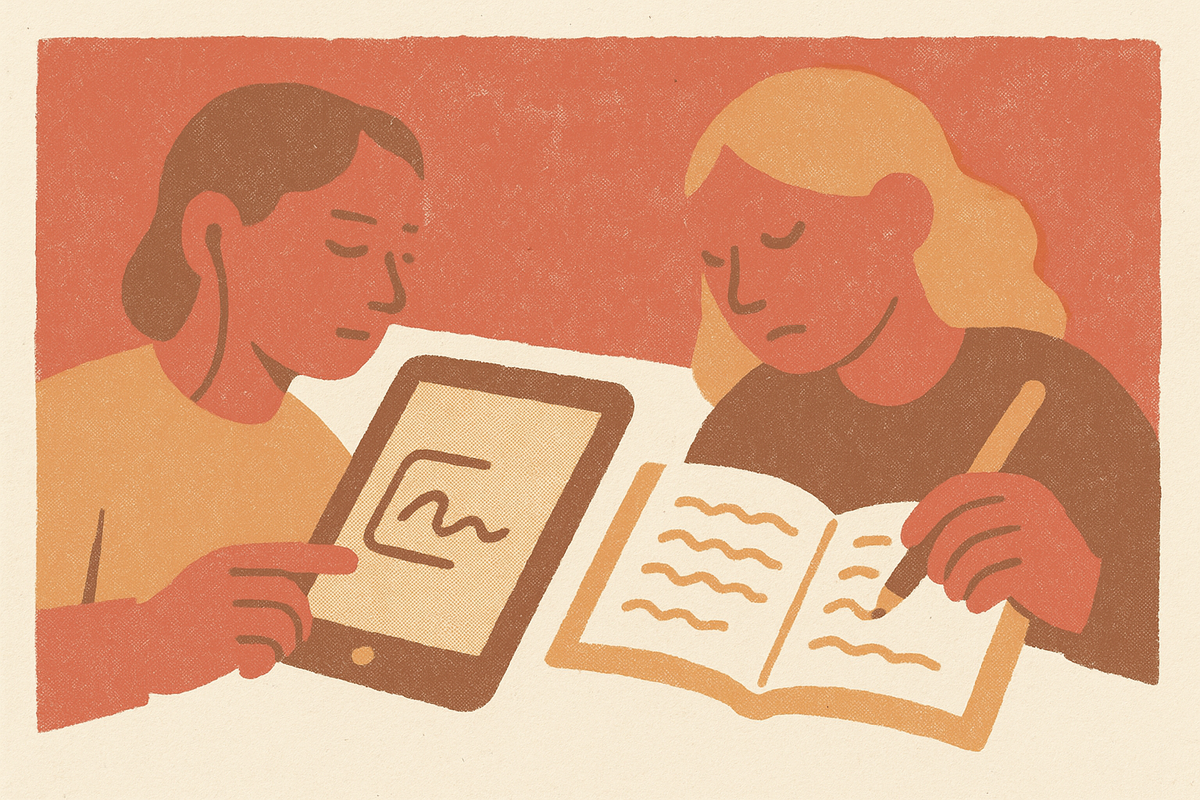
The friction that makes writing difficult can also make it valuable. Choosing words with care slows a person down enough to look closely at a statement. A fluent recording may capture the breadth of a feeling while leaving a central assumption untouched. Writing can make that assumption harder to glide over. When the goal is analysis rather than immediate expression, speed is not always an advantage.
Handwriting also has a distinct relationship with learning and memory. It shows greater neural engagement in regions associated with learning and memory formation than typing, which supports its appeal for mindful processing or memory consolidation. That comparison should not be stretched into a universal ranking of handwriting, typing, and speech. Working through a decision, examining a recurring pattern, or planning a response may benefit from the deliberateness that writing requires.
The practical next step is a hybrid approach. Voice can capture the initial emotional response and the breadth of a live moment, while writing can support later analysis when the goal shifts toward understanding. A person who could not begin on the page may have something concrete to examine after talking. The initial recording supplies material without requiring it to be the final form of the work.
What app lets someone talk out anxious thoughts and return to them later?
AudioDiary is the clearest fit among these options for someone seeking a dedicated voice journal with mood tracking. It is built around recording an entry, then transcribing it, tagging sentiments, and tracking mood over time. Its visual mood graph spans weeks, months, and years. It is available on iOS, Android, web, and macOS. The distinction is its emphasis on returning to an emotional record.
Speakwise is the stronger fit for an iPhone user who wants hands-free capture and an organized archive. It supports AirPods recording, produces AI summaries of key themes, and extracts action items from spoken commitments. It also supports 100+ languages with automatic detection. Recording works offline, but transcription and AI summaries require reconnecting. Native Notion sync provides a searchable archive across entries, and access is through a paid annual subscription.
MirrorSelf addresses a related need, but it is not yet an answer for someone who needs voice recording now. Voice recording is coming soon, and the plan is to use OpenAI Whisper for transcription. Available on iOS and Android, it is built to surface recurring patterns, contradictions, and an AI Pattern Coach nudge across entries. Its free plan includes export. Its focus on what comes next may help with overthinking, but its planned voice features are still to come for those who want to journal without typing.
These differences explain the more useful comparison in 2026. Transcription accuracy has become a baseline feature; the larger question is what an app lets a person do with the record afterward. A summary of one entry, a mood graph, and pattern detection across entries serve different purposes. They should not be treated as interchangeable forms of insight. For a voice-first user, the recording experience also needs to be central rather than a record button appended to a text-first journal.
Privacy is a separate selection criterion for emotionally sensitive entries. MirrorSelf encrypts entries at rest with AES-256 and says it does not use journal content to train AI models outside the user’s own account. Speakwise uses standard cloud encryption and says it does not train AI on its users’ data. DailyVox has a Face ID / Touch ID app lock that controls who can open the app, though questions about how it handles data still need answers. Encryption, device access, and training policies are distinct protections, so one reassuring feature should not stand in for the others.
What makes a voice journaling habit last past the first week
Low-friction recording makes a habit possible, but it does not give that habit a place in the day. An open-ended intention to talk sometime leaves the decision to be made again and again. A specific moment removes some of that negotiation. The sustainable version attaches recording to something already happening, such as immediately after a commute, at the end of a walk, or before sleep. For an existing voice-note user, that can feel less like scheduling another task and more like giving a familiar action a new destination.
Streak mechanics can reinforce that attachment. Research on streaks shows that people exert more effort to preserve one than to perform the same action without one. A streak is therefore a behavioral lever. It can provide a reason to open the app on an otherwise forgettable day. It does not, however, establish that the resulting entry will be thoughtful or useful.
The reason to return also has to extend beyond recording another entry. Mood history, searchable transcripts, summaries, and cross-entry patterns make an app a container for revisiting what was said.
Voice journaling fits this group because it begins with an existing way of thinking and communicating. Keeping it useful still requires a trigger, a container, and a reason to return. The best apps offer all three without making the start feel like another assignment. The next step is not to become a more disciplined writer, but to give spoken thought a reliable place to go.
Sources
- How Journaling Can Help Ease Anxiety and Encourage Healing
- From Thought to Action: How a Hierarchy of Neural Dynamics Supports Language Production
- "I Talked an AI Chatbot, So What's Next?" How U.S. Young Adults Imagine Responsible AI for Emotion Coping
- Editorial: Voice analysis in healthy subjects and patients with neurologic disorders