The App That Listens to Tuesday and Asks You About It on Friday
Time and distance transform how your brain processes what you felt into what you understand.

Norihama and colleagues’ caregiving study found two modes on one spectrum, with close-up writing releasing emotion and more distant writing supporting calmer analysis. That difference is the case for temporal distance in journaling. For someone seeking a private voice journaling app with conversation memory and follow-up questions, the useful design is not simply one that remembers Tuesday, but one that helps you think about Tuesday differently on Friday.
What the brain is actually doing when you write about something that happened three days ago
An experience still unfolding competes with the effort to describe it. Emotional charge is high, cognitive distance is low, and working memory is occupied by what happened and what might happen next. Asking for a polished account at that point asks the brain to record the event and stand outside it at once. Those are different jobs. A journal that treats them as one task can make a useful act of capture feel like an unfinished act of analysis.
Writing later changes the conditions of that work. The prefrontal cortex, language system, and narrative-construction network help turn scattered thoughts into structured representations, so processing moves from reactive limbic activation toward more regulated prefrontal engagement. Time gives this organizing work more room. When these systems help organize an account on Friday of what happened on Tuesday, the immediate experience no longer has the same claim on attention. A later account can consider causes and consequences.
Yet some regulation can begin before any deliberate step back. Matthew Lieberman’s fMRI work showed that naming an emotion in words reduces amygdala activation, with greater prefrontal involvement accompanying a quieter fear response. Finding the word can itself change the processing. This is affect labeling, which can regulate emotion spontaneously and explains the distinct usefulness of an immediate entry alongside the work of a later entry.
So why not simply label the feeling and stop there? James Pennebaker’s expressive-writing finding distinguishes emotional release from narrative construction, with venting producing no benefits in the work described here. The useful work was giving a difficult experience structure, including a beginning, a middle, causes, and consequences. That takes more than an emotional inventory. It requires enough cognitive distance to connect the parts, which makes early capture valuable as material for a later account.
How does voice capture make in-the-moment journaling easier?
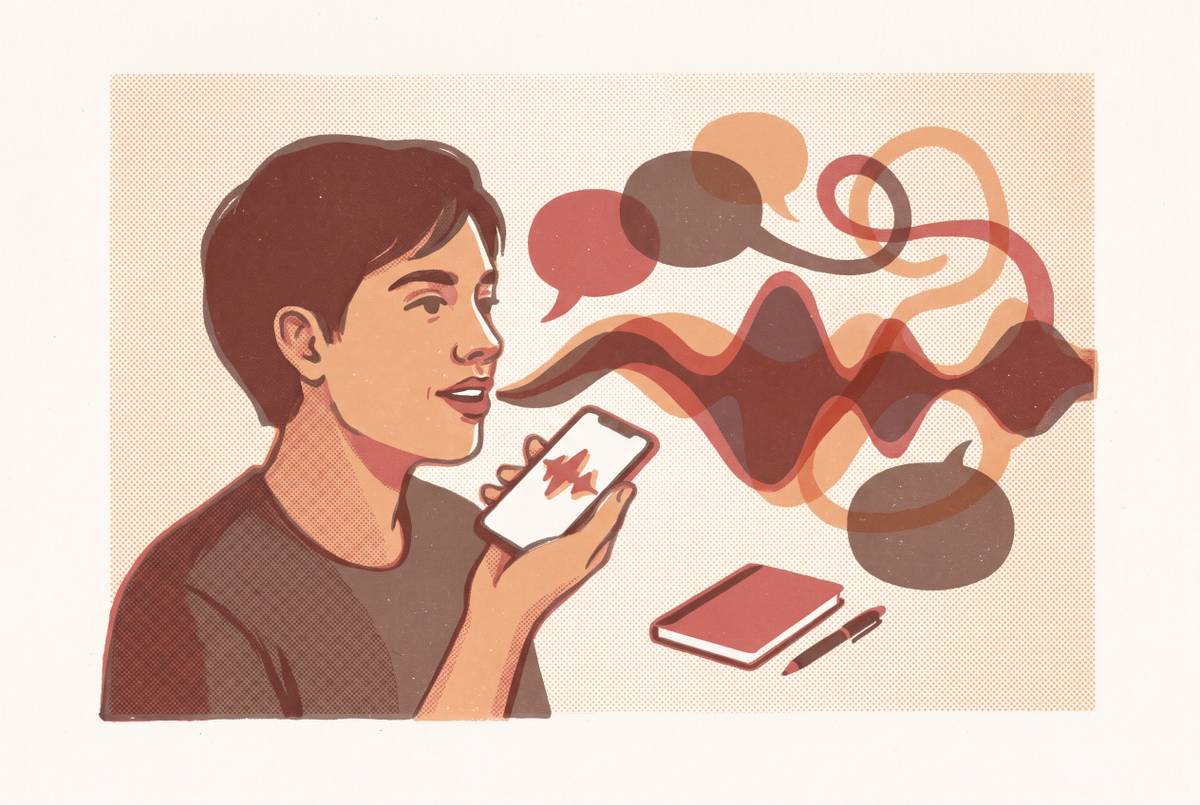
Voice suits the first task because speaking an experience aloud makes fewer demands than composing it as writing. A person can record what feels salient without first deciding how a sentence should begin or whether its account is coherent. The blank page loses its veto power. This is especially useful while attention is still caught in the event, when the effort of turning experience into orderly prose can prevent an entry from happening at all.
That lower friction also changes what gets preserved. Writing involves filtering and processing, while speech can keep some of the feeling that a carefully written account smooths over. Hesitation or the sound of a voice can be part of the material. Capture need not sound like a report. In the two-act design, an entry earns its place by preserving something available for later thought.
Michael Yin, Robert Xiao, and Nadine Wagener’s Reflective Motion and a Physical Canvas explored this distinction in a 2026 within-subject experiment with 20 participants. The CHI’26 study compared embodied journaling in virtual reality with written journaling, finding that body motion and paralinguistic acoustic qualities could reveal deeper, sometimes hidden feelings. Participants sometimes bypassed words altogether. Because the study involved movement and a physical canvas as well as speech, it does not establish that a voice recording alone reproduces the whole effect.
Speaking can preserve the experience while it is vivid, leaving the harder work of interpretation for a time when that work is more feasible. Voice lowers the entry cost of capture. It does not make every recording insightful, nor does it remove the need to return to it. Its contribution is to make the first act possible without forcing the second act to happen prematurely.
What time-delayed prompting actually does to the material you captured
A delayed prompt changes more than the position of an entry in a feed. It brings earlier material into a different psychological setting, where the person revisiting it may be less absorbed by the original emotion. A question asked then can invite analysis that an immediate question would have had to compete with the event itself to obtain. The delay is therefore part of the reflective design.
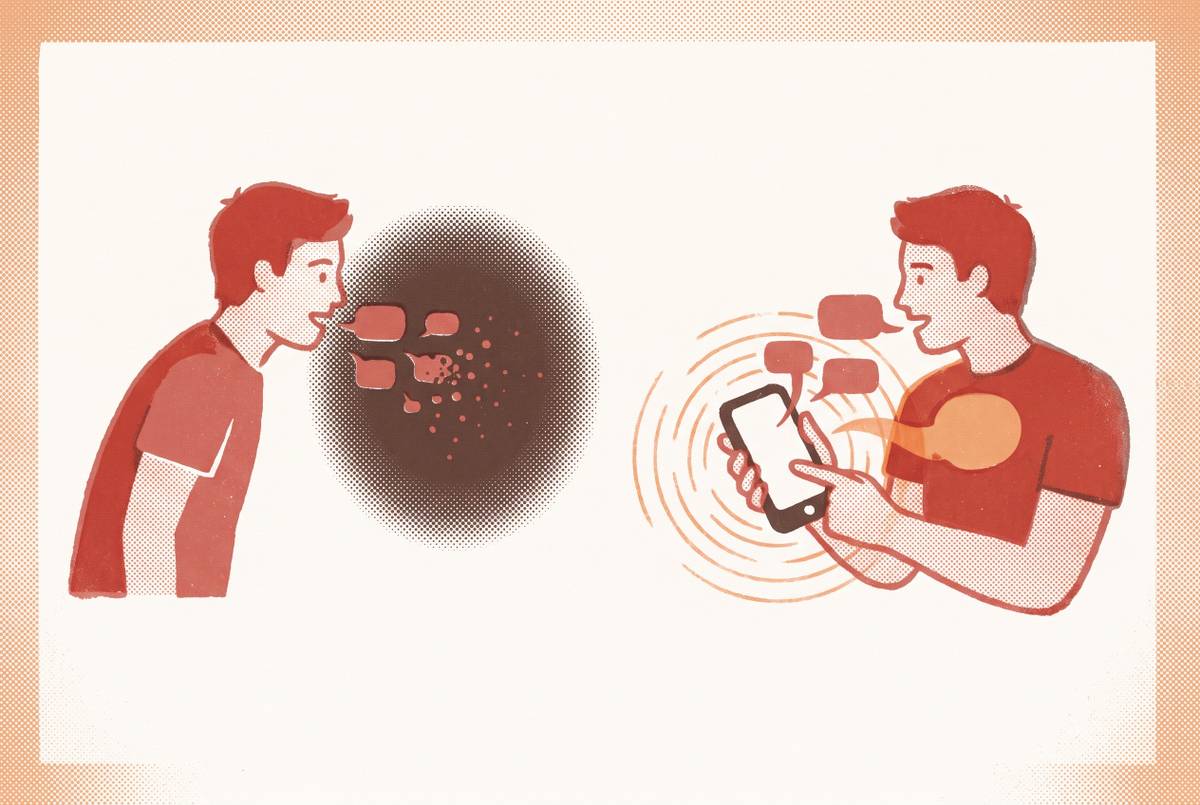
Shunpei Norihama and colleagues’ study gives this distinction a concrete basis in family caregiving. Under psychologically proximal conditions, participants wrote detailed, emotion-rich accounts focused on the care recipient, while distal conditions supported calmer, self-focused, analytic writing. Neither mode supplied everything the other could. Proximity preserved vivid detail but limited objectivity, whereas distance supported analysis while risking memory loss. Recording early and prompting later helps with that trade-off by keeping the close-up material for a time when the person can read it with more distance.
A Tuesday-to-Friday schedule serves only as an illustration. The study considered temporal, spatial, and social distance, so elapsed time should not be treated as the only route to a changed perspective. Waiting also gives no guarantee that a person will feel differently. The prompt creates a deliberate return. Its value depends on whether that return opens a new question about the experience.
The SoulNote study also looked at what happens when people keep coming back. Its multi-session diary study of reflective songwriting with people who are deaf or have hearing loss found emotional growth as sessions went on, while earlier tools had mostly been tested in single-session settings. That is a different activity and population. The study gives no proof of which voice-journaling schedule to use, but it supports looking at how people develop across sessions rather than judging a reflective tool by one session alone.
Conversation memory can bring more than one entry into that return. Tuesday’s feeling may look different when considered with other entries from the same week, making it possible to ask whether it was an outlier or part of a recurring pattern. This is a second use of time. Remembering earlier sessions gives a tool something to build on, while questions asked later give the person a chance to think it through. An immediate follow-up and a later follow-up can therefore be complementary features.
The genuine risk: when the tool's interpretation replaces your own
If narrative construction is the work, an AI-generated narrative may give the user its finished product while removing the activity that was supposed to produce insight. A fluent summary can conceal that substitution. The system may appear to have understood Tuesday beautifully, yet the person whose experience it was may not have considered its causes, tested its meaning, or decided what follows from it.
Pennebaker’s finding makes this more than a complaint about impersonal wording. The benefit came from constructing an account. Putting an experience into order means choosing what belongs together and why. A supplied interpretation can settle those choices before the user has made them, particularly when it is presented as an authoritative reading of a pattern. Agreement with a summary is not evidence that the same cognitive work has taken place.
Remembering earlier material can make a question more relevant, but using that memory to announce what the material means can narrow the user’s response. More interpretation is not automatically more support. Even an appealing explanation can become a shortcut around the uncertain, sometimes uncomfortable process of arriving at an account. That uncertainty is not necessarily a flaw in the experience that the product should eliminate.
Questions the user has not already answered preserve useful friction by returning the organizing work to them, whereas interpretations delivered as conclusions can replace it. In general, asking whether an earlier feeling fits a wider pattern leaves the person room to think about that link. Declaring the pattern settled does not. The distinction is not between a clever system and a simple one, but between a system that invites judgment and one that quietly makes the judgment on the user’s behalf.
Voice-first capture offers one advantage here, provided the design preserves expression rather than immediately converting it into categories. It can keep the person’s own words available until a later prompt invites reconsideration. The embodied-journaling study offers a brief supporting caution. Some expression emerged before, or outside, verbal formulation, so an instant verbal interpretation need not exhaust what was being expressed. Voice alone is no safeguard against overinterpretation, but separating capture from explanation leaves space for the user to decide what the material means.
What the two-act design looks like in practice for someone building a journaling habit
The capture act preserves what happened and how it felt without requiring a complete explanation. The later act returns to that material with a question that calls for thought. Each has a manageable purpose of its own. A difficult day does not have to yield a coherent personal essay before it can leave a useful record.
This framework also clarifies what to look for in an app. Voice input captures the experience, conversation memory links sessions, and follow-up questions ask the person to think more about what was recorded. Delayed follow-ups also give the person a chance to step back. A tool that asks about what was just recorded may support elaboration in the moment, but that behavior alone does not establish that it remembers earlier sessions or helps the user revisit them later. Those are separate capabilities.
Privacy is a separate requirement again. The evidence here does not establish any app’s storage practices, access rules, or other privacy protections, so it cannot support a private-app recommendation or a ranked shortlist. A tool could fit the two-act framework while leaving the buyer’s privacy question unanswered, just as a private recording tool could preserve entries without providing any reflective follow-up.
A voice recording and a later return can follow the basic structure without an AI interpretation in between. An app can make that sequence easier to sustain, but the reflective work still belongs to the person revisiting the experience. The aim is limited to cognitive work. A durable habit gives vivid experience somewhere to go now and gives it a fair hearing later, without demanding both jobs from the same tired Tuesday.
Sources
- Reflective Motion and a Physical Canvas: Exploring Embodied Journaling in Virtual Reality
- Two Modes of Reflection: How Temporal, Spatial, and Social Distances Affect Reflective Writing in Family Caregiving
- From Daily Song to Daily Self: Supporting Reflective Songwriting of Deaf and Hard-of-Hearing Individuals through Generative Music AI