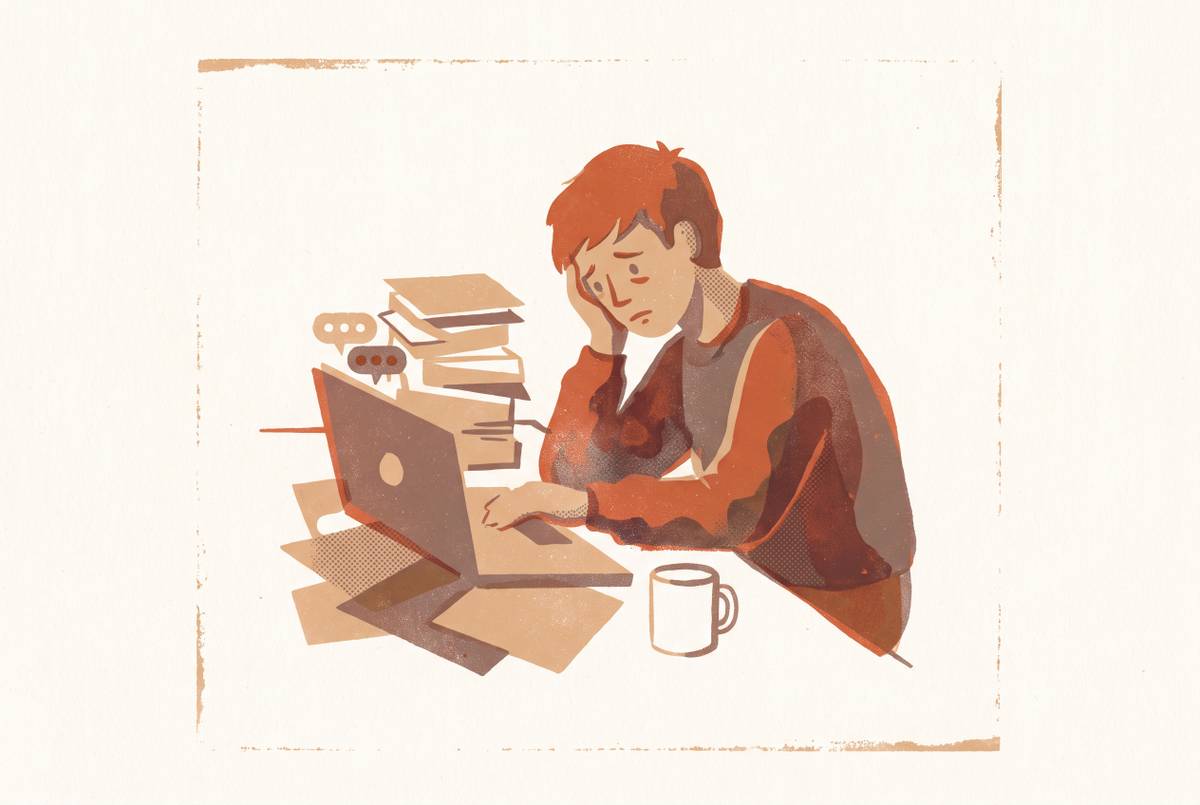
Housing Cost Anxiety as a Chronic Stressor
Persistent rent anxiety activates chronic stress systems differently than one-time financial shocks.
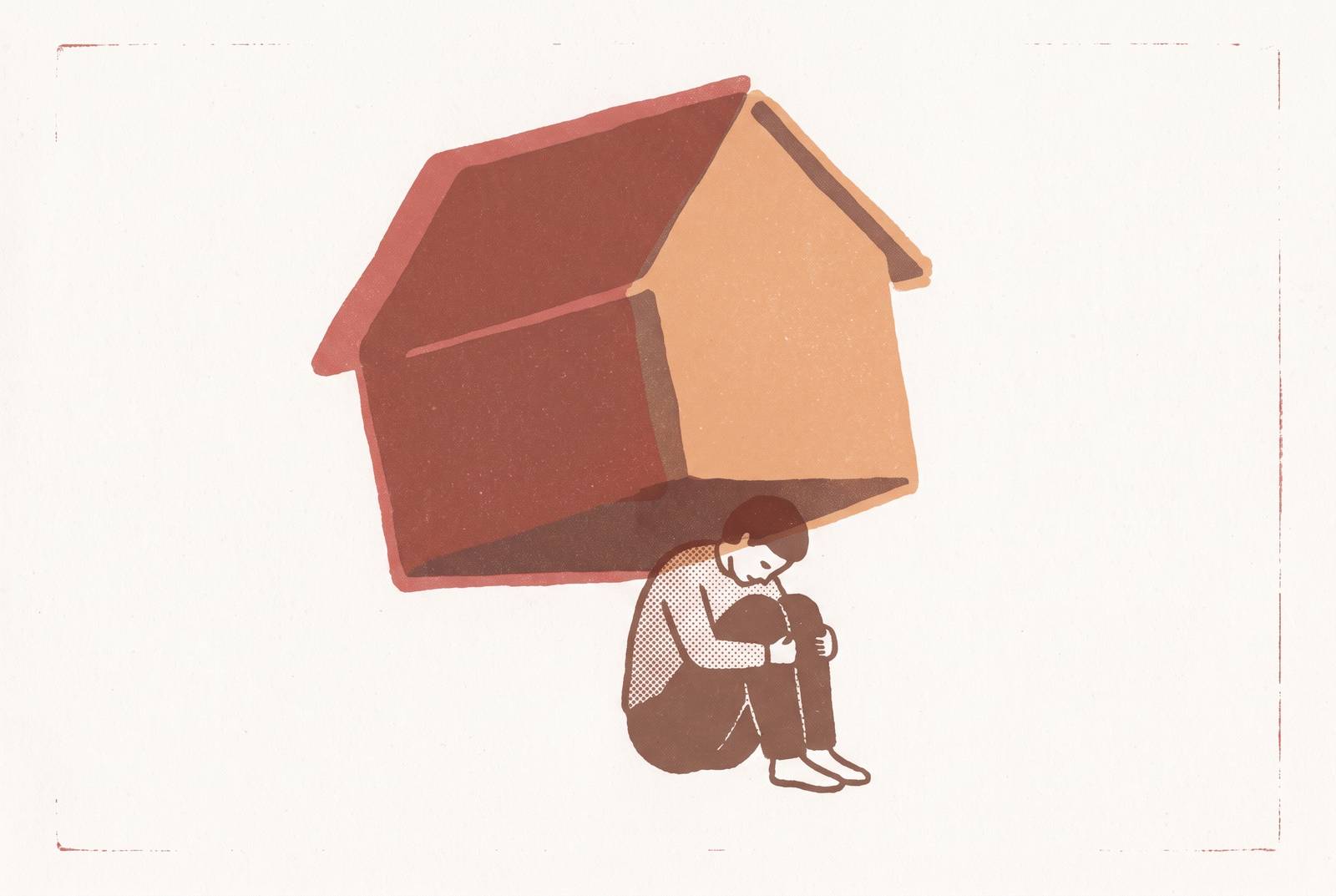
Housing cost anxiety doesn't behave like a layoff or medical bill. Those are discrete shocks: they hit, they hurt, and eventually they resolve, one way or another. Rent does not resolve. It renews. Most coverage treats housing affordability as a math error, a supply shortfall, or an upstream policy failure. That framing is not wrong, but it misses what actually lives in a person's nervous system. Housing Cost Anxiety as a Chronic Stressor.
Stress researchers distinguish acute stressors, tied to single events like divorce or job loss, from what Penn State's 2025 Frontiers in Public Health review calls "quotidian stressors": persistent everyday difficulties, including the repeated strain of scraping together rent or a mortgage payment. Housing cost pressure sits squarely in that second category. The source of the anxiety doesn't clock out at the end of the month. It just goes quiet until the next bill arrives, then starts right back up.
That structural quality is the whole argument of this piece. A one-time fix, a budgeting worksheet, a single therapy session, a motivational article, addresses only a moment. It doesn't address a stressor with no near-term resolution, since homebuilding collapsed during the 2007–2009 crisis and affordable-unit recovery has lagged. What follows traces how this stress behaves in the body and brain, and why the matching coping mechanism must be as recurring as the problem itself, since a sustained, low-friction reflection habit earns its keep.
How widespread housing cost pressure is
Before the psychology, a blunt question: how many people actually live inside this? A stressor affecting a small slice of the population differs from one baked into the housing market for tens of millions.
Nearly half of American renters are housing cost burdened, spending over 30% of income on housing, per a congressional report; more than a quarter spend over half their income just for shelter. That's not a rounding error in a spreadsheet. Among renters recently hit with a rent increase, three in five frequently worried about having to move because the new rent was unaffordable, per Washington Housing Conservancy data. Worry, in that context, is closer to a roommate who never leaves. It's closer to a roommate who never leaves.
The supply side explains why this isn't going away soon. Senate Banking Committee testimony from February 2025 put the affordable housing shortfall near 2.6 million homes (roughly two years of new housing starts at the current pace). Homebuilding collapsed during the 2007–2009 financial crisis, and affordable-unit recovery never caught up. The gap is structural tightness that a good building season will not fix. It's structural. The stressor has no near-term resolution for millions of households.
One wrinkle: a 2026 Chiba University study of 6,619 Japanese adults found that measuring housing affordability at the household rather than individual level tends to dilute the health risk shown in the data. In plain terms, standard statistics probably undercount how many people are actually anxious about this. The real number is likely higher than the official one, which is odd, given the crisis already affects nearly half of renters.
What housing cost anxiety does to the body and mind over time
The 30% figure isn't just an accounting convention. It functions as something closer to a mental health tripwire. A 2025 study of over 10,000 Australian renters found mental health drops sharply once housing costs cross the 30% threshold, with missing even one rent payment causing further decline. Renters and owners differ: 38% of private renters said their housing harmed their mental health, versus 23% of owner-occupiers, pointing to insecurity itself, not just cost, as a driver.
Why does insecurity carry its own weight separate from the dollar figure? Because the stressor doesn't operate through one channel. Physiologically, it activates the same stress-hormone systems (the sympathetic-adrenal-medullary and hypothalamic-pituitary-adrenal axes) that fire during physical danger. Behaviorally, it forces tradeoffs against food, medication, and preventive healthcare. Socially, frequent moves sever ties to neighbors and community networks that would otherwise buffer stress. Through sleep, housing instability's distress disrupts rest, raising later risk of cardiometabolic disease and cognitive decline.
A related 2026 Frontiers in Psychiatry study on cost-of-living pressure frames its mechanism as chronic stress, threat anticipation, resource depletion, and constrained choices, citing earlier reviews naming shame, loss of control, rumination, future uncertainty, and reduced social participation as broader mechanisms of financial hardship. Layering those together forms a clearer picture: several overlapping systems are all leaning on the same person at once. It's several overlapping systems, all leaning on the same person at once.
The injury outlasts the event, too. A study of 11,303 respondents from the National Longitudinal Study of Adolescent to Adult Health found housing-affordability struggles predicted depressive symptoms both the following year and 7 to 8 years later, per NLIHC research. So the worry that seems to pass when the rent check clears doesn't actually pass. It settles somewhere and waits. The stressor operates through multiple simultaneous pathways, per the Penn State review in Frontiers in Public Health. Housing instability among families with children under 18 is projected to result in a $111 billion increase in U.S. healthcare and education costs over the next decade, per Frontiers in Public Health.
Why the brain stays stuck: rumination, the amygdala, and chronic stress's effect on cognition
The biology gets specific here. Chronic stress can physically alter brain structure over time, reshaping the organ doing the worrying: it's linked to reduced hippocampal volume, impaired neurogenesis, and weakened prefrontal cortex function, which governs cognitive flexibility and emotional regulation. That's not a metaphor. The organ doing the worrying is being reshaped by the worrying.
The amygdala, the brain's threat detector, stays switched on during chronic stress, and housing cost anxiety keeps it humming even on days nothing acute happens. Rumination is the cognitive fingerprint of that state, and the mind loops through the same eviction scenario, the same unaffordable-renewal scenario, and the same displacement scenario, without ever landing on a resolution. A 2026 Frontiers in Psychiatry cross-lagged network analysis, using 4,085 observations from 471 participants across 12 monthly waves, found cost-of-living pressure indicators showed high autoregressive stability (the pressure sustains itself rather than only flaring in response to fresh news). The stress is running on its own fuel. It's running on its own fuel.
Why would a brain get stuck this way? Financial threat is processed through the same circuitry as physical threat, but physical threats usually offer resolution: run, fight, flee. Rent has no equivalent exit. There's no direction to sprint toward, so the activation lingers with nowhere to discharge. That's precisely why a single conversation with a financial advisor or one cathartic vent to a friend doesn't quiet things down for long. Those interventions treat the content of the worry.
So what would actually make this feeling go away." It's "what kind of regular practice actually interrupts a loop that renews itself." That's a different design problem, and it points somewhere specific.
How writing about stressful experience interrupts the anxiety loop
Writing about a stressor is not the same as venting about it. Venting circulates the same emotional content without changing how the brain processes it. Structured writing, expressive writing specifically, engages distinct neural mechanisms that venting doesn't touch.
Start with affect labeling. A 2007 UCLA study led by Lieberman found that naming an emotion in words reduces amygdala activation, turning down the threat-detection system. Converting chaotic emotion into structured language also engages the prefrontal cortex, pulling the brain's rational, regulating part back online (a pattern confirmed by neuroimaging studies reviewed by MindJrnl).
None of that requires the housing costs to be resolved first. It just requires the thought to leave the loop.
James Pennebaker's research at the University of Texas at Austin, running from the mid-1980s onward, established the foundational case that expressive writing about deeply emotional experiences improves both mental and physical health outcomes. A landmark Frontiers in Behavioral Neuroscience study found people who wrote about past failures before a stressful task showed a dampened cortisol response, reducing the physiological stress reaction, not just the reported feeling. Journaling also directly engages the default mode network, the brain system active during self-reflection and future planning (for housing anxiety, the system that helps shift someone from catastrophizing toward actually planning next steps).
None of this makes rent cheaper. The stressor stays exactly as real as it was before the page was opened. The body either keeps running the alarm between actual housing events, or it gets a chance to power down. Journaling disrupts rumination by externalizing thoughts onto the page, creating cognitive distance for analytical rather than purely emotional processing, and supports meaning-making by organizing chaos into narrative, per Reflection.app's summary of a 2012 study.
Why consistency matters more than any single session
One entry doesn't do much. Journaling doesn't work like aspirin, and pretending otherwise sets people up to quit after a week.
An analysis spanning three decades of expressive writing research found that some relief appears within days or weeks, while deeper benefits (reduced anxiety, sturdier resilience, firmer identity) appear only after months or years, per a synthesis from The Supportive Care blog. One study found people managing medical conditions and anxiety who wrote online for 15 minutes, three days a week, over 12 weeks, reported increased well-being and fewer depressive symptoms within the first month, with improvements continuing throughout, per WebMD's coverage. The entry bar is lower, though: even five to ten minutes daily appears to make a measurable difference, per Bass Medical Group. The variable that matters is how consistently a session recurs over time. It's whether the habit survives long enough to compound.
The chronic-stressor logic makes the design principle obvious here. Rent doesn't resolve, leases keep renewing, and the supply gap isn't closing next quarter. A coping response built around one big session (the night before a lease renewal meeting, say) arrives too late to have banked the resilience months of practice would have. Pennebaker's research shows benefits compound through sustained, repeated engagement, not occasional bursts of intensity. The habit has to outlast the problem's own rhythm, which, for rent, is monthly and indefinite.
Choosing the right journaling method for housing-related stress
Journaling isn't a single technique with different flavors slapped on top. The methods do genuinely different jobs; for housing cost anxiety, journaling should target processing fear and shame, disrupting rumination, and rebuilding agency over a situation that often feels out of hand.
Expressive writing, Pennebaker's original protocol, involves writing without stopping for several minutes about the deepest thoughts and feelings tied to a stressful event. For housing anxiety, it's the heaviest-lifting method: it directly targets fear of eviction, financial shame, and loss of control, carrying the strongest evidence base of any journaling approach here, per HelpGuide's journaling resource.
Evening reflection journaling reviews what went well, what was hard, and what got accomplished that day, per ONLYOFFICE's journaling guide. Its usefulness is structural: it anchors attention to the day that actually happened rather than an imagined eviction months out, countering housing anxiety's forward-catastrophizing pattern.
Morning pages (three unfiltered pages written before the day starts) clear mental clutter before it accumulates. It suits planners and anyone whose anxiety spikes around financial admin or the start of a workday.
Gratitude journaling works through a different lever entirely. Research shows it lifts life satisfaction, lowers stress, buffers against difficult life events, and is linked to reduced worry, reduced rumination, and increased optimism, matching two mechanisms named earlier. It works best as a complement to expressive writing during high-distress stretches, per HelpGuide.
Bullet journaling, a visual system of quick lists, symbols, and habit trackers, suits organizational personality types and is useful for the practical side of a housing crunch: tracking a lease renewal date, mapping a budget, logging rent increases. It should not, though, be confused with emotional processing work. Bullet journaling and traditional journaling serve fundamentally different needs and shouldn't be treated as interchangeable, per ONLYOFFICE's resource.
For anyone who finds a blank page too much friction, or thinks more clearly out loud, speaking a reflection engages the same core mechanisms (affect labeling, externalizing the thought, building narrative out of chaos), without the effort of composing full sentences. Since dosage research keeps naming repetition as the deciding factor, whatever lowers the effort to show up daily does real work, and the tool can be a pen, keyboard, or voice memo.
Prompts that work specifically for housing cost anxiety
A blank page with no job to do gets abandoned fast.
For the emotional processing side, the prompts that map onto the mechanisms already covered, shame, loss of control, rumination, future uncertainty, tend to work best when they're specific rather than vague. Something like: what exactly is feared about the housing situation, and what is the most probable actual outcome, separate from the worst one. Or: where does the housing worry appear physically right now, and what does that sensation feel like in concrete terms. Or, pushing a bit further: what does this particular anxiety reveal about what's actually being protected, whether that's stability, family, a sense of belonging in a neighborhood.
For reclaiming agency, better prompts point away from the unsolvable housing shortage and toward the narrow slice within reach this week: which specific lease terms, savings moves, or landlord conversations are realistically possible now, and what the smallest useful step would look like. None of these prompts fix a structural housing shortage measured in millions of homes. What they do is give the nervous system somewhere to put the thought besides in a loop, which, given how this particular stressor behaves, is most of the actual battle.
Sources
- Housing stress takes a toll on mental health. Here’s what we can do about it
- Introduction
- Background
- High Housing Costs Have Long-Lasting Impacts on Mental Health of Renters | National Low Income Housing Coalition
- Housing and Mental Health - Washington Housing Conservancy
- Frontiers | Housing insecurity pathways to physiological and epigenetic manifestations of health among aging adults: a conceptual model
- Housing affordability and psychological distress: Household measures mirror individual estimates but miss one in three at-risk adults - PMC